Among the reasons are that kids (and some adults) are idiots. That's it, it's not income inequality or rage at the system, some people just break things because they think it's funny. That's not something you can fix, so you have to guard against it in other ways.
Is't that just bad education or parenting in the end ? I don
t think many people with good parents & education would be essentially insane to break thinks just for fun.
In general, I think you kinda need to fix people rather than make the environment basically so hostile to everyone, to prevent a small group of people from breaking it. Not saying its easy, but in my the only correct way.
I don't agree with your claim, but assuming you're right: Do you think that trying to solve "bad parenting" is less intrusive than cameras in robotaxis?
I hope so, but at the same time - I'm not sure how to best do it without ending up with some different authoritative issues.
Like, in general, you kinda want people to be good parent so their children end up as decent humans (that for example don't vandalize public restrooms for fun). But any direct attempts to control that process, even if well meant, would be rightfully considered a horrendous form of government/societal meddling. So it is definitely hard.
In any case, I think removing as many sources or uncertainty and stress as possible (stable income, affordable housing, no naked corruption visible day by day, etc.) could hopefully have positive outcomes on parenting without direct interference with the process. And I guess a better founded & more prestigious for the teach school system could also help.
As much as I disagree with it, graffiti is an interesting topic. A lot of graffiti proponents fully believe that they are beautifying the environment by making it human, and even continue doing it as the level of effort to bypass the consequences go up. They don't believe it to be an awful thing (though I'm sure some do, plus some have other motivations, plus some are lying to themselves about their motivations, etc, I just mean what they say and do).
People are awful when they think they aren't being watched, especially with communal or other people's property. It's why things are covered in lame low-effort graffiti tags, why bathroom mirrors have things scratched into them with keys, and why bridges over highways all have metal grates to stop people from throwing rocks at oncoming cars.
When people know they're being watched and there will be immediate consequences if they do something bad, their behavior changes. If they don't, they're awful. We've seen this for decades (arguably millennia, as we know Pompeii had graffiti too)
Cloud providers want to make sure they bill someone for every microsecond of compute, particularly GPU compute which is in demand. They constantly work towards good monitoring because their profits are directly on the line.
That is an article saying that mesh networking frameworks exist. It does not support the GP claim of smart TVs creating mesh networks across different owners.
I turn on the device, the app in the upper left is selected and showing some content from that.
The device sits idle, I get drone footage of landscapes.
If I accidentally bump the wrong button on the remote and get sent into the Apple TV (streaming service) app, sure it advertises producte, but in general there are no ads.
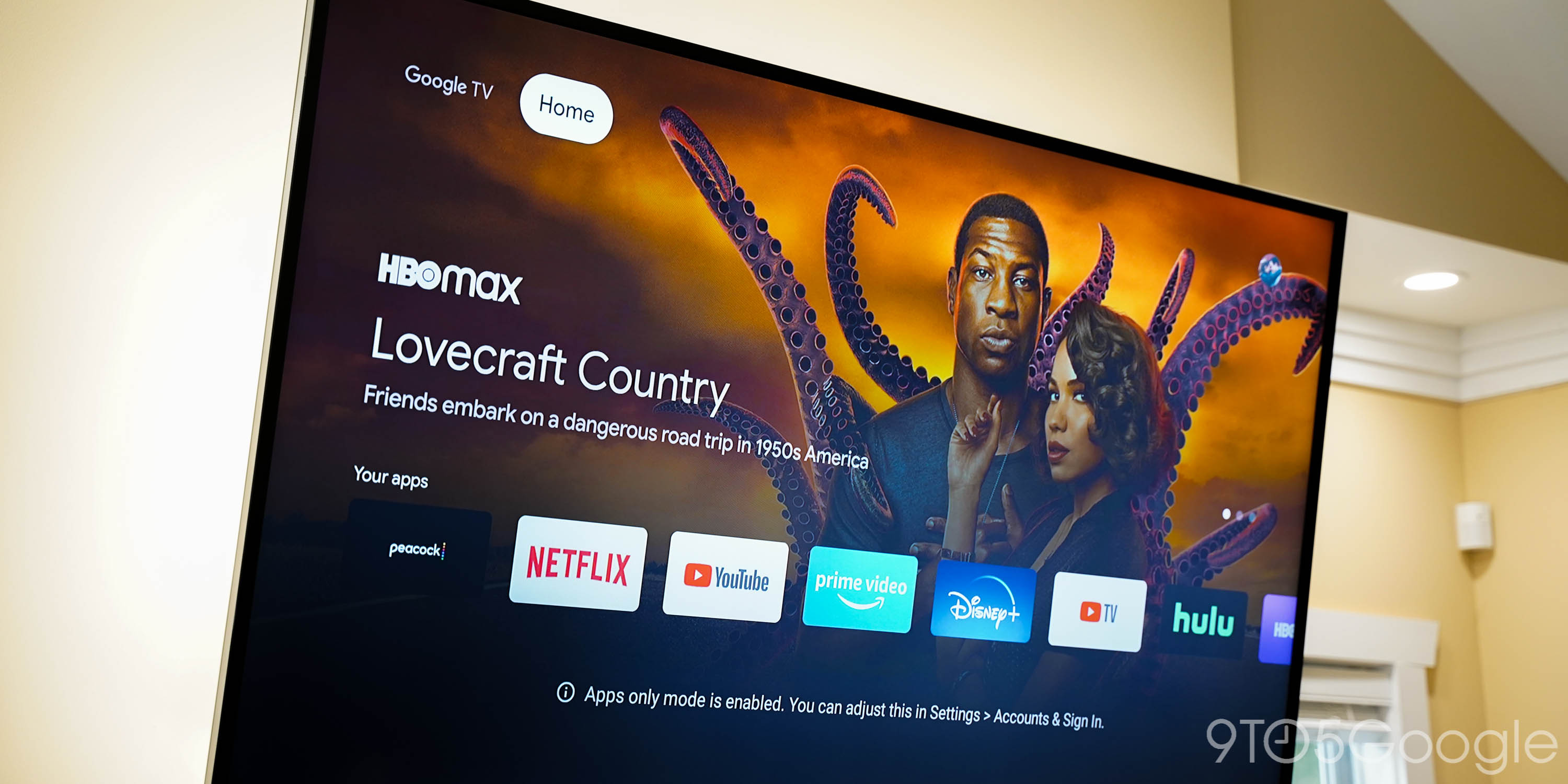
In comparison, Google TV's homescreen is giant ads for content on services I don't subscribe to, Roku is at least as bad, Amazon is worse, and Samsung and LG......oof.
App-only mode on android tv has a giant ad banner before the apps icons. It's much better than regular mode, but it's still a giant ad. It's been the case on all my Android TV devices. If you don't see it then I guess it must be disabled in some regions?
The shield is vastly superior to the Apple TV. You aren't trapped in Apples wall garden and can install any apps on it. Android TV comes with an awful launcher, but that is easily replaced. There's no sponsor block on Apple TV and there never will be.
No, it's not. Let's start with the disclaimer that I work for Google, not the Android TV team, all words my own, etc.
The Shield at launch was an amazing product - premium UX and hardware, premium price point. Google changed the experience to an ad-loaded mess without providing an opt out for those who had spent hundreds of dollars on the Shield.
I was dogfooder, a huge advocate of the product, and someone who had convinced others to buy the Shield and Android TV devices. That UX revamp and how the team treated their customers (internal and external) turned me off the product for life. I tried the various competitors (XBox, Roku, Amazon) before landing on Apple TV. I now own two Apple TV devices - both of which are still getting updates many years after I bought them - and will continue using them for as long as the product line is maintained.
People in this thread have talked about Apple's clean beautiful ad-free UX, but the apps themselves are far better. Apple sets customer-friendly App Store requirements *and enforces them*. That means:
* The back button always works. It will bring you back to the home page of the app and then to the system launcher. It will not get stuck in an endless loop of "are you sure you want to quit?" and just dismissing that dialog like multiple Android apps do
* No loud obtrusive sounds on app startup (YouTube, Netflix)
* The apps are first-class priorities for developers. Circa 2019, the Paramount+ app was an inconsistent mess where subtitles were broken on some platforms. The Plex app wouldn't transcode certain formats on the XBox, and so on. None of these issues are a problem on Apple TV. Not every app is perfect (Dropout, I love your content, but your app is awful), but none of them are worse than on any competing platform.
Apple TV is a truly incredible product and ecosystem and one that feels like a joy to use. That's not the case for Android TV (now Google TV, I think?) even with a custom launcher.
Perplexity Launcher is free and takes <2 minutes to install on the Shield or other Google TV devices and has zero ads. Being able to sideload apps that will never be allowed on the Apple TV is a major benefit for anything piracy adjacent.
I (and most users) don't care about that. Having a great app for YouTube and other services I use is far more important than being able to stream pirated content.
You can also use the VLC app on an Apple TV to have a free and slightly janky media server. Just drag and drop files through any browser on a computer.
Good point, we should also allow foreign organizations to contribute to US election campaigns and make Facebook ads because they might also believe in civil liberties as rights and ideals, uh... right?
It's OK to say you wish a politician was dead. It's not OK to pay someone to kill them. It's OK to say that you support some criminal activity (let's say Luigi), but it's not OK to offer direct financial support for their crimes.
> It's OK to say you wish a politician was dead. It's not OK to pay someone to kill them.
Both actions are equivalent, as such words are (social and/or political) capital bounties offered to the masses in return for fulfilling the death of said politician.
Capital always exists, even in the form of words. To deny a variant of capital whilst allowing another variant is inconsistent/doublespeak.
Just because it's not printed onto a piece of denominated paper, doesn't mean that such capital doesn't exist.
> Both actions are equivalent, as such words are (social and/or political) capital bounties offered to the masses in return for fulfilling the death of said politician.
Neither the law nor common interpretation of words agrees with this. There is a significant and crucial difference between words and actions.
> There is a significant and crucial difference between words and actions.
The difference is artificial, and delusionally blinds itself to the base reality that social/political capital exists.
Again, just because there isn't a cash figure attached to that bounty, doesn't mean that a reward hasn't been attached to it in the form of social/political prestige.
Do you think your country is the only one that thought of free speech? Your particular implementation is irrelevant, I'm not sure what you're trying to achieve by giving us a lecture on how some foreign country justifies their self-perception.
That being said, it is somewhat humorous how you're confirming the stereotypes that apparently even that needs guns and violence over there somehow?
> Hmm, I would have expected more outrage from the US "free speech absolutists" over this US government decision
The crowd that claims to be in favor of free speech should be in favor of free speech for everyone, not just US citizens. This thread isn't about the government - it's about how HN's very vocal "free speech" crowd are actually libertarians who want to say awful things and not get called out rather than people who stand up for the concept of free speech in general.
Why is my position invalid? I'm in favor of the exact type of free speech provided by the Bill of Rights for citizens of the USA, of which I am one, and that I do not care about the fantastical universal "for everyone" form of free speech that is being pushed on HN?
Let your own countries defend their own "free speech" rights. The UN cannot defend it for you, and you cannot defend it for yourself.
Blame free works with humans where you assume good intent.
It's harmful and dangerous with corporations with a proven history of lying and disregard for human lives and well being. Especially ones with a record of developing and optimizing addictive products.
This is a interesting point. I gave some thought to the nature of what was being processed. In some ways another New World agricultural product gone industrial, cocoa, brought about some companies that at a minimum rival the tobacco companies for contributions to ultra-processed foods, examples Nestle and Coca-Cola.
Like tobacco, cocoa is not an essential food and also has psychoactive components. Thus companies formed around industrializing the material must develop methods of persuasion and navigate oppositional socio-political pressure. Like the sibling comment's observation that "any more "ethical" tobacco company got out competed," the most successful were especially suited for adopting other food production lines both from an industrial-technical and a socio-political perspective.
any more "ethical" tobacco company got out competed. result: blame tobacco companies that survived.
People still smoke. any lies the tobacco companies sold to the public were either so old that few alive heard them, or believed them when they were told.
I think I mis-spoke when I wrote "blame-free" because while I come from a psychological-safety inquiry perspective, the term isn't quite descriptive. The purpose of dropping "blame" is that stopping inquiry there without understanding what lead to the "bad thing" leaves a lot of valuable knowledge on the table.
Agents (and humans) don't know what cleanups are safe or a good idea. They can get stuck in loops when different goals (conciseness, performance, etc.) clash. Their "improvements" can break things unintentionally. Targeted improvements can be good. Giant lists of "fix everything" are bad and will break things.
Tech debt comes with insufficient tests, so you won't know what you've broken until too late in many cases.
Yeah that's why step 0 is to tell the LLM to write a test suite for the thing you want to rewrite. It'll do that, but it does require adult supervision. Once you have that test suite, you can send the LLM into an inner dev loop. Like human programmers, LLMs are great when they have a fast inner loop.
The fact that LLMs exist doesn't mean you can just stop thinking. It mean the things you have to think about will be different. You have to treat them as savants with absolutely no ambition.
There’s a trap here though: the LLMs if you let them will spend all their time maintaining that test suite, they can become quite rigid in the way they design them. So it’ll write some code, break a test, which breaks a contract so then it updates the test and the contract but updating the test also broke another contract… soon enough you’re spending all your tokens fixing contracts instead of writing code.
In a sense the LLM having a fast inner loop is its blessing and curse. A blessing because it gets feedback quickly, but a curse because it becomes naval gazing and cannot see the forest for the trees.
At least this is my experience with Sol maby other models behave differently.


This is why public restrooms in the US are vandalized, why there are low effort graffiti tags all over, litter in parks, and more.
People believing that something is watching - a human or machine with the autonomy to enact consequences - preserves the commons for the rest of us.
reply