Another point: US universities look very different from German ones. I live in Corvallis (OSU) now but grew up and went to school in Stuttgart Germany. Compared to the German universities our US schools are country clubs: dorms, restaurants, coffee shops, fitness clubs, green spaces everywhere. Don't even get me started on the sports, it's an outrage how US schools have become sports franchises.
I'm guessing most US students would be shocked by the reality of German public universities which basically consist of giant rooms with blackboards and there's not much general ed to speak of. At the graduate level it gets more interesting but that's in years 5-8. My first 4 years studying ME in Stuttgart were almost 100% lectures with a final exam at the end of the semester. Virtually no tutoring and very little corrected homework.
You don't get what you don't pay for. On the other hand, you don't really get what you pay for in the US either since the universities have become so good at sucking up more and more student loan money without really improving on their core mission of providing higher education.
If by 'general ed' you are referring to optional classes that are not necessarily related to your core subject or electives, I would like to say that you have very much the option (and in most reformed Bachelor-type programs it's a requirement) to take such classes and choose among many types of seminars ranging from communication and negotiation coaching to optional language classes.
Also note that in contrary to (or so I think) most for-profit US universities which impose a rigorous bookkeeping on credits taken vs. tution fees, students at German public universities can -- on their own initiative, by asking the professors or offices directly -- easily listen in to or take exams in random classes, even from other departments. If the professor agrees, they'll get a singed certificate with a grade which they can use for credit in their electives. I on one occasion took a Psychology as well as Economics classes, and had no problems in turning these into useful credits.
> You don't get what you don't pay for
German universities work for people who can act on their own initiative, they enable people to progress. Guidance is optional and provided on request/on intervention. I'm thankful for that by not charging as a for-profit institution, our universities don't need to cater to their clients as (service) staff.
That's the thing. German unis aren't schools; in fact the whole point (or at least original point before we got degree inflation) of our "high school" (Gymnasium) degree is to prepare students to be able to go on with a higher education on their own.
If you want a more school-like experience, there are Fachhochschulen (more technical schools, "FH") instead of universities. Even in Germany many students complain that unis are too technical and don't provide enough handholding, and I always think WTH don't they just go to an FH then?
Often the FH offers very similar degrees, and while some employers care about the difference, many don't mind (many even don't care if you have a BSc or a MSc/Diploma, at least in IT). So there is a "Diploma in computer science" and a "diploma in computer science (FH)", in addition to the nowadays more common BSc/MSc.
Sounds similar to the Dutch situation. No handholding in university. Lots of opportunity to fuck up all by yourself. I never understand people who call it "school", because it really isn't. If that's what you want, there's also the "hogeschool" which also counts as higher education, but practical, professional education, whereas university is called "scientific education". The actual level of science varies a lot of course, but mainly you've got to do more yourself.
I spent a month in exchange at a Gymnasium in Germany. It is hard to express how different it is from a US high school. The main criticism I've heard is that the Gymnasien are good at the expense of the Hauptshchulen.
For those not familiar, the Gymnaisien are college-prep schools that start around 4th grade, and roughly the top 1/3 of academic performers qualify; the rest of the students go to Realschule or Hauptschule which are more of a vocational track and end around 10th grade.
Agreed, the German system worked well for me and there are other higher-ed systems in Germany that take up the middle ground between 6-year degrees and vocational schools.
It would be politically impossible in the US to have a high school system like Germany's where university students effectively get selected in 5th grade and in consequence the US has everyone entering the same undergraduate system. Universities here have to cater to a broader audience, they just don't do it that well because even state schools now look very much like for-profit operations.
>Also note that in contrary to (or so I think) most for-profit US universities
Most US Universities aren't for-profit. In 2000 (the latest stat I could find) about 6% of college students were enrolled in for-profit universities). For-profit schools also generally have rather dubious reputations.
if you believe that non-profit universities in the US in any way behave as actual non-profit institutions, I have a course on bridge-building to sell you
I studied in Berlin (Berlin has very little money) and while nearly all my undergraduate education was in the form of black board lectures (which I like very much), all my homework was corrected and every lecture had a tutorial session where homework was discussed and you could ask questions about things you didn't understand in the lecture.
In most cases, these tutoring classes are even run by students (because the professors don't want to / don't have time), so you get good explanations that you can actually understand, and the tutors have a nice way to make some money on-campus, and to go deeper into the subject themselves.
I remember my mother speaking to some college admissions person at a semi-prestigious school in Pennsylvania, many years back when I was in the throws of applying. When speaking to some admissions confusion with respect to my high school, the guy said, "Well frankly, it's not called the Ivy League because of its academics." That's always stuck with me. Athletic scholarships? You betcha. Academic scholarships? What are those?
Ivies give so much need based scholarships that athletic scholarships aren't required. If someone's parents and poor, the school finds a way for them to graduate debt-free. (This is a big plus for them)
As for sports having an impact... They may not let in a 900 SAT football player, but 1200 may be enough for an Olympic rower.
>"Well frankly, it's not called the Ivy League because of its academics." That's always stuck with me. Athletic scholarships? You betcha. Academic scholarships? What are those?
What are you talking about? Ivy League schools do not offer athletic money and all (now, not when I was applying) are need-blind, giving tons of money to those who need it.
I never said anything about them not giving money to students who need it. Not once.
I simply stated what was told to me about athletics. There's a difference between financial aid, and academic scholarship. Recruiting for academic purposes occurs much more so in post-undergrad situations. Whether or not you want to believe that athletics play a role in admissions and awards is up to you.
This is not my experience at all. I studied physics at a public university in Germany. We had about the same number of tutoring hours as lectures each week and had to hand in homework every week for every lecture. That homework got graded and decided if we were permitted to take the final exam. Also from the second semester on we had compulsory experimental courses throughout the year.
On the other hand you are right, there is hardly any general education at university level, but that is (supposed) to happen in high school. At least compared to the UK, high school covers a much broader range of subjects.
> On the other hand, you don't really get what you pay for in the US either since the universities have become so good at sucking up more and more student loan money without really improving on their core mission of providing higher education.
If you laser-focus on making money, then eventually you become pretty good at it.
If you laser-focus on educating people, then eventually you become pretty good at it.
> If you laser-focus on educating people, then eventually you become pretty good at it.
I don't think you can call putting 500 people in an amphitheater in front of a single person and a blackboard remotely "pretty good at educating". It's one of the worst ways ever to transmit knowledge. And it shows.
This is a myth. A common myth yet still unintuitively false.
I once reviewed statistical data for high school level success metrics across countries. It is statistically observable how small a correlation there is between class size and education quality
A good teacher can engage 50 students as easily as 500. Some of the best classes in my life have been in 200 people packed amphitheaters.
It's not about the class size, it's about the environment. Amphitheaters suck bad. A normal classroom is much better, and an online class is way better than an amphitheater.
Well the Berlin universities sort of have those things as well - federally funded student housing, canteens, coffee shops and university sports. I think the difference is mainly in the amount of money thrown at it. American universities just tend to have a ridiculous amount of money to throw at everything - from research to fitness centers.
In my native Norway the universities have more money than in Germany, but still not the kind that American universities have. The American dominance in research comes from two things: A PhD culture and the best lab equipment on the planet.
If efficiently managed, dorms shouldn't represent a significant burden on students above the price of living in off-campus housing.
>restaurants
Generally make a profit.
>coffee shops
Generally make a profit while employing unskilled students.
>fitness clubs
Okay, these are probably excessive, but fitness is fairly important.
>green spaces everywhere
I'd be really surprised if this accounted for an appreciable percentage of institutional expenses, except maybe if the campus was located somewhere with very expensive real estate.
I'm guessing that the real story is that German universities bring in a lot more taxpayer money and employ fewer people.
German here who also studied abroad for a year (US state college). Overall, there are many similarities, but also differences.
I was surprised how freaking EASY everything was in the US university, compared to Germany. Multiple-choice tests, not much background knowledge assumed. Very school-like system (instead of assuming students will learn some of the necessary background at home).
I've seen different German universities, and indeed some of them might not offer a gym or on-campus dorms. In fact, often at least a few university buildings are spread out throughout the city, instead of being in a single connected campus area.
My German university had some subsidized housing though, and there were also private student dorms and they were very cheap, unlike the US dorm which was IMHO quite expensive. I also had a small but nice gym at my German uni.
Probably every German uni has a restaurant ("Mensa") which is often very cheap because of subsidies. Again, in the USA we had to buy expensive meal plans and overall it wasn't cheap at all.
But I loved the connectedness of the US campus, the atmosphere, the greens. The whole campus culture gives you the opportunity to either have a great partying time or a great studying time - I've had a bit of both. But overall, in Germany I learned MUCH more of the technical stuff.
Buildings spread out through the city seems to be a product of having older universities. The oldest Dutch universities have that too, whereas newer universities tend to have most buildings concentrated on a campus. I know of only one that has on-site dorms (TU Twente), but most do have affordable student housing in the vicinity (though never enough for all students). There's usually a cheap, student-oriented sport center connected to the university.
University restaurants (also called "mensa" here) are pretty cheap, but quality is mediocre. Better cook your own dinner.
Hm, I've heard many complain about the food quality at our mensa, and many never ate there, but overall my experience wasn't bad. No fancy restaurant quality, but better than typical prepared/frozen meals and not at all bad.
Well, it was a state college, I'm actually really good, and we couldn't pick graduate classes in the US, even though I was a senior already, and if you compare standards that basically means graduate. But most likely it just wasn't an engineering school.
I've also had other classes, though (languages, marketing ...), and those were really easy as well.
Whether you believe they're what a university should be concerned with or not (and that's just, like, your opinion, man) the fact that they turn a profit means you can't point to them as wasteful spending or a culprit for high tuition.
They are frequently granted monopolies and students are required to pay for them whether they want to or not, which means that they aren't subject to any market forces and costs spiral out of control. Frequently there isn't even a line-item you can point to on your bill, it's just swallowed up in general tuition.
They don't run those, they generally contract them out to Sodexo or similar company. The only reason they are there is because students spend money on them. You should have more of a problem with student free spending ways than with the universities just providing for their habits.
Big problem with this. Particularly with dining plans, many of which don't refund at the end of the term/academic year and are required for the dorms. You want to be thrifty and only spend 600 or the 800 you had this spring? Too bad, you're going to have to splurge the last 200 somehow or you're not getting it back.
You pay $x,xxx per semester so that your student ID allows entry to any of the institution's dining halls any time during operating hours.
Dining halls typically contain several stations with different kinds of food available at a buffet-style counter, and you can eat as much as you want. Some meal plans count entries; others are unlimited.
The system has its drawbacks, but keep in mind that:
- Dining halls primarily serve students who do not have access to (reasonable) kitchens. Forgoing dining halls would mean increasing the sqft/person ratio of the housing system.
- It is probably best that students with low discretionary income aren't in a position where they feel obligated to skip meals to save money.
- Dining halls are paid for by their customers. If you move to an off campus apartment (or even on-campus apartment-style housing), you are no longer obligated to pay in to the campus dining system.
The biggest offense, to me, is that dining hall systems are usually contracted out to huge corporations like Sodexo and Aramark. Dining plans can average to $12/meal, but the quality is several times worse than what I could buy at a restaurant for $12. My dining halls also employ (generally poor) adults from the neighboring community. While I guess this is nice, it's a little weird that we're the ones eating and they're the ones being served.
I'd much prefer that my university run its own dining halls, employ students to staff them, and not ask us to pay somebody's profit margin.
When you live in a dorm on campus, you are required to buy a meal plan for meals, and they aren't cheap or flexible. This is why I couldn't afford to live in the dorms as an undergrad in America.
So a meal plan is like an subscription to meals? Why don't they sell it normally? How much is each meal with that plan?
In our Mensa at the university we pay between 1.50 and 4€ per meal (exclusive drinks).
To go into more detail, here's the typical lecture format at a German university (note that this is "typical", not universal, and professors have a lot of leeway in how they can structure their courses).
There'll be a lecture twice a week (four "semester hours", 2 times 2 * 45 minutes) and a two semester hour exercise session. The lecture will be held by a professor [1]; the exercise session for undergraduate courses will generally be conducted by a TA in smaller groups.
More often than not there won't be a textbook, except for heavily standardized courses (or where the professor chooses to pick one). You'll work off the professor's lecture notes and any notes that you took yourself (sometimes the lecture notes are basically a textbook by themselves, but that's obviously a lot of work for a professor). The lecture notes may recommend additional literature, which is generally available through the library's course reserves (and out of which students will photocopy anything they consider relevant; private copies short of wholesale copies of books are generally legal in Germany) or online (in the case of individual papers).
You'll get homework once a week, distributed as printouts during the lecture (and/or available on the course website). Students are encouraged to work on homework in groups and to even turn in their results as a group.
Homework will be graded, but it doesn't count towards your final grade; instead, you will be required to get 50% of the total points to be admitted to the final exam (this is more an incentive than an actual threshold). You can generally even copy the results from somewhere else (you're doing homework as preparation for the exam, so you're only hurting yourself if you do it).
Homework will be returned and reviewed during the exercise session, usually with either the TA or one of the students presenting the solution to each question on the blackboard and discussing it.
Your entire grade will be derived from the final exam (some courses these days have two exams, one midterm and one final exam so that your entire grade doesn't ride on one day's performance). Some courses may also have an oral rather than a written exam.
There generally won't be grading on a curve (though the professor can adjust the grades if the exam turned out to be harder than intended). If you fail to meet the standards that the university expects of its students, you fail. German professors won't shy away from letting most of the students in a course fail (though they will likely be sad when that happens). That's the price of a mostly open admission system combined with the university's desire to maintain its academic reputation.
In addition to lectures, there will be (depending on the subject), seminars, lab courses, etc. You will also have to write a thesis (including for a Bachelor's degree).
In general, there's very little handholding (that's not specific to Germany, though). You're expected to be able to both study independently and work productively in a group (skills that you should have learned in school) without needing support.
[1] Using the term "professor" broadly to include "privatdozenten" etc.
I've attended four different higher education colleges and three universities in the UK, and two universities in the US. Mostly STEM, some business and law courses.
My UK experience is pretty much in line with the above summary from my college life between 1986 and 1995. Lots of blackboard lectures, practical coursework where necessary, one, occasionally two exams per subject. Coursework grades determined whether you would be permitted to sit your exams. Broad spectrum of skill and knowledge levels at the start of the course, very even distribution towards the end. You either figured it out, or you failed.
My US experience was more like school, lots of handholding, lots of silly child-like exercises, broad spectrum of skill levels and knowledge at the beginning and it remained so right through to the end. Lots more negotation between students and professor about assignments and when they are due, and skirting the rules, especially on the business courses for an MBA I was enrolled in. The pace on the MBA could be described as "plodding" at best.
This is also my ancedotal experience and also probably not universal.
This was also my experience as a recent BBA grad. However I think that business schools expect a certain level of flexibility to be beneficial to its students as several (hopefully) will be partaking in entrepreneurial activities.
I took computer science and math courses at Michigan State myself for my Ph.D., and taught computer science there.
While the basic structure (lecture + exercises) is what you'll get in most countries (part of the point of my post was to dispute the OP's claim that there was little graded homework in Germany and no tutoring), I'd be surprised if your typical experience included, e.g., that homework didn't contribute to your final grade, was routinely done in groups (I've seen it happen at MSU, but it wasn't typical), or that your grade depended only on a single exam. In fact, looking at the syllabus for ME 201 [1], it's pretty obviously not the case in general.
To illustrate one of the major differences, consider that there really is no such think as cheating on homework at German universities. If you outright copy another student's work, the TA will generally just ask you to form a group to avoid grading the same solutions twice. Copying is considered stupid, because doing the homework yourself (ideally in a group) is important in order to be prepared for the exam, but it's generally allowed (again, exceptions exist). There are no complicated rules on when and how it's allowed to collaborate on homework [2] because the norm is that students are supposed to collaborate on homework (which has multiple reasons: working in groups is to be encouraged, it requires fewer TA hours and is thus cheaper, doesn't require anti-cheating technology, etc.) [3].
> There'll be a lecture twice a week (four "semester hours", 2 times 2 * 45 minutes) and a two semester hour exercise session. The lecture will be held by a professor [1]; the exercise session for undergraduate courses will generally be conducted by a TA in smaller groups.
That sounds like an average course that I've taken at my university here in Norway.
I'm no fan of how enormous college sports have become, but fwiw they are enormous sources of income and despite the extravagant stadiums and suchlike, they often pay for valuable research, courses, and amenities.
What's troubling about them is the exploitation of the student athletes; the ones that make money give a lot back to the university as a whole.
Sources for any of that? While some sports (football, men's basketball) are profit centers that can offset the cost of non-revenue sports, that really only applies to the top-tier programs (NCAA Division 1).
I've never heard of university sports programs being major sources of revenue for research or courses (outside of possibly sports-related studies).
I was talking about the top-tier Division 1 schools, mostly because I can't see anybody having a problem with intramural or Division 3 sports. Scholarships aren't awarded, they don't have huge budgets, their coaches generally aren't grossly overpaid, and they're a good way for students to get exercise, meet people, and relax.
I have to wonder if there is anything like this available in the US aside from MOOCs? I haven't explored far, but even the ostensibly bare bones community colleges I've looked at were trying to emulate the typical inclusive social experience model.
I guess your point makes sense for general university. However, there is a way to have fairly cheap education with good feedback, with skill selection. I went through the French equivalent of the Ivy League (Paris Tech): tuition was “free” (hundreds of Euros per year, paid-for for most students with economic difficulty) and tutoring was systematic. However, having consistent classrooms where groups of 15 had the same level helped a lot.
Those schools receive a lot more tax-payer money than university does, but not impossibly more. Saving on that without sacrificing the pedagogy seems doable: teachers often were alumni that could have easily contributed out of duty and prestige (I certainly did: paperwork to get paid was a maze).
True, but I would argue besides the point: the US universities/colleges offer a more integrated experience because many have a somewhat different tradition more in line with the "monk-like" experience from UK universities such as Oxford and Cambridge than with the public university systems of continental europe which assumes that many of these amenities are provided by other actors.
They also have to make up for massive differences in educational level, meaning you have a lot of foundational courses that are plainly unnecessary from the perspective of the German educational system with its, previously, 13 years of schooling -- and Germany is a lot more homogenous in that respect compared to the US, so the system works without all that much hand-holding.
If by "monk-like" you mean being distracted/surrounded by tons of incredibly hot 18y/o bombshells wearing hot- or jogging-pants (depending on the season) and flip-flops, then yes. I loved my year in the US, but it wasn't because of the monkness. (Although as a technical student or nerd you might end up the monk among the ladies.)
> Don't even get me started on the sports, it's an outrage how US schools have become sports franchises.
I graduated from a very large sports school (tOSU), and our sports program enables us have a relatively low in-state tuition. The 2010-2011 football season netted OSU 51.8 Million. 2011-2012: 48.7 Million. They also serve as a great way to get alumni to donate to their alma mater (in order to increase your odds of getting football tickets, you can donate). It is anything other than an outrage.
Hiring person tutors once in a while in this situation is miles ahead in cost/benefit ratio compared to an american university. And with the Berliner comment, it sounds like you can still get feedback and questions answered.
Hiring a tutor that may or may not be in tune with the specific issue at hand that you need help with and the class/topic context vs going to a TA who is intimately familiar with the course and is likely already leading recitation sessions and exam reviews, and two widely different things.
I work in the US but I never went to University here so it's hard to say. The German system worked great for me but honestly, I think the US systems would work just as well, assuming I could pay the tuition at a decent school.
Don't they have practical courses? Do experiments?
Soviet and post-soviet education systems were modelled after german ones, but lab practice makes around 30%. For more abstract topics, practice/discussion/seminars.
- lectures: final exam that accounts for 100% of your grade, and sometimes (possibly obligatory) regular homework
- practical courses / labs: how grades are assigned vary, sometimes this will be a "do a project in a team" kind of assignment, sometimes it's experiments where you are expected to write one or more reports
- seminars: you'll be assigned a topic (usually some recent, narrow scientific result, no wildcard giant topics here) and expected to write a report on it & give a presentation
The exact mixture depends on your course of study.
It depends on what you study. In my CS classes we had a few lab sessions where we had to implement small programs and sometimes even larger projects. However, a friend of mine studied chemistry and she never got to leave the lab.
Has there been any extensive research done on relationship between university fees and social mobility?
On one hand it seems obvious that if you reduce costs of attending university you remove a barrier that would prevent economically disadvantaged people from attending.
But on the other hand, university students, especially those at the best universities disproportionately come from better economic backgrounds and this seems to be true everywhere. In this case it doesn't seem fair to tax people who are poor to pay for something that is mainly of benefit to the rich.
In the UK we have a student loan system where students do not have to pay back loans unless they earn over a threshold amount, so in theory there is nothing to prevent a poor person going to university regardless of how high the fees are.
I can only provide anecdotal evidence. I come from a poor family and studied in India in a government university by paying $20/year. The cost of providing that education was estimated at $1000/year and private universities used to charge as much. If the government had not provided that subsidy, I would not have taken a loan to the tune of $1000/year because that would have been too risky. I would have opted for the less risky option of herding cows.
Fast forward 15 years, I worked in a research lab and in 2009 I paid more than $12000 in income tax alone. I also created more employment by spending the money I earned. The government got a great return on its investment and it can now fund the education of more people -- a virtuous cycle.
Almost half my class was in a similar situation and most of them are doing good.
It's not so much anecdotal as circumstantial. If everyone was taking the loan, you probably would too. It is the same in England, were students took loans for 3,5k pounds a year and now even 9k a year.
Now I am not saying that the British system is the ideal (pros and cons) but I can certainly provide some more anecdotal evidence of many people who study for free (in the Czech Republic) and are basically wasting the system resources (both in terms of taking up spaces in classes and having the tax status of a student). But possibly even better argument for tuition is the level of funding for universities. It certainly seems greater in tuition based systems (I know the US and UK one) vs government sponsored one (like the Czech one).
This is my exactly my point. In the US, many students take an educational loan -- but, I would argue that most students in the lower social strata (e.g. African Americans whose parents have not had the benefit of college education) still think consider it a risky option and that 'it is not for them'. And those who graduate after a student loan are forced to take suboptimal choices (because now they have to pay back that loan). Also, I don't understand why a university education has to be so expensive -- you can get great content through MOOCs. If you can somehow combine that with mentoring (from senior students), you can easily provide low cost, high quality education to those who need it.
In the UK system there is no risk. You only have to pay back the loan (form the government) when you are earning over a certain amount per year. It is taken directly from your salary like other taxes. If you never earn enough money you never have to pay it back. If you choose to live and work abroad you don't have to pay either.
In the U.S. student loans can be very high risk. There's no guarantee your degree will help you get a higher paying job, and the loan repayment requirements are the strongest imaginable, even bankruptcy can't wipe student loans off your debt.
In the US, it's very risky. If you default on your loan, your credit will be terrible, and your credit determines the quality of your life. It determines what house you can get and whether you can get internet service.
You have to pay your loan regardless of whether you have a job or not, or whatever your financial condition is. Exceptions can be made (you go through a loan handler, so it's whatever they say) but overall it's a risk. It's just a risk that pays off for most people.
Why don't you (or lots of US citizens) lobby for introducing a law that student loans only have to be paid back as long as you earn a decent amount of money (as in the UK according to a post higher in the tree)?
If you want to go to university, and you're not from a privileged economic background, avoiding private student loans isn't really possible, unfortunately. Doubly so, because people from disadvantaged economic backgrounds have no idea how to find government money to help them attend college in the first place. And government loans usually don't cover all of the expenses related to university anyway, so private loans become necessary.
>> "And government loans usually don't cover all of the expenses related to university anyway, so private loans become necessary."
Again, not in the UK. Students here are given two loans. One to cover tuition and a separate one for cost of living. It's not much but it's enough for a student to get by.
Considering that African-Americans are who all sorts of really sketchy for-profit vocational colleges are marketing themselves to (Corinthian College, anyone?), it's not really surprising that this demographic thinks that college is a risky option.
> but I can certainly provide some more anecdotal evidence of many people who study for free (in the Czech Republic) and are basically wasting the system resources (both in terms of taking up spaces in classes and having the tax status of a student).
That's more of an anecdotal evidence of a shitty public university system. I don't know how it works in the Czech Republic other than from your comment, but in Slovenia, it's extremely wasteful, even though it doesn't need to be.
The primary issue is that students have awesome tax and other financial benefits. First, you don't pay tax for (I'm not completely sure, but lets say) more than the minimum wage as a student. Then, you get subsidized food (lunch coupons), free healthcare (as long as one of your parents is employed) and lots of benefits with private companies (I had a bank card that allowed me free withdrawals anywhere in the EU, even in a different currency). Personally, I don't see an issue with free healthcare (I think it should be free for everyone, as it is in the UK), but tax breaks and lunches are a unnecessary benefit.
This issue is exploited by "perpetual students" - basically, there is no incentive, nor requirement, that you finish your studies "in time". The only limit is that you can have the student status until you're 26 years old, so many people stretch their studies beyond what's necessary and work for private businesses, gaining experience and not being taxed, for several years before they complete the last exams and graduate. (Then they complain that they can't get a job, because all the businesses prefer to hire students, because they're cheaper).
If education was free, but you were required to finish on time and there were no tax benefits of being a student, the system would waste much less money. To reduce the cost even more, the government could automatically give you a "nominal loan" that was automatically canceled when you finish your study, so only people who study and don't finish would have to pay, and you'd also have to pay for any additional years you need (e.g. if you fail a year).
> To reduce the cost even more, the government could automatically give you a "nominal loan" that was automatically canceled when you finish your study, so only people who study and don't finish would have to pay, and you'd also have to pay for any additional years you need
Watch out; independently of being an effective idea or not, this would create a strong incentive for extensive corruption.
Maybe a free education, but add a screening process to measure the psychology of the student, help choose a profession or trade that will not be a waste of their time.
This is true. I had to clear an 'entrance examination' to prove my aptitude in engineering. But the problem is the people who would benefit the most from free education (at the lower social/income strata) will most likely have poor aptitude for high-income potential professions as well, because of poor primary and secondary schools they would have had access to. I know that some institutes take such students and provide one year of remedial education before providing an engineering education. They will take one more year to graduate, but overall a win-win situation.
In the US some public schools are vastly better than others even when they receive similar funding. Quality of the local schools is a significant factor in home prices.
That ship is in the Guinness Book of Records under, "Longest distance sailed." These days, practically every university student is there to better their job prospects.
Unfortunately, the thing that I think would be the most useful doesn't seem to be available. I would like something that was somewhere between a trade school and a university.
I have a bachelor's degree in Computer Science, which is really the minimum degree I would have chosen to get a job in my present field. However, probably at least 50% of the classes I took to get that degree were a complete waste of my time.
"Trade schools" in my view have a reputation for not having enough depth in the field for which they are targeted (at least, in the United States). The perception when I graduated was that a CS degree was way better than any "tech school" degree -- if you wanted to get a job, that is.
I would have loved to have gone to a school that offered a very deep Computer Science program that was targeted just at Computer Science. I didn't need or want English, Philosophy, Sociology, and all of the other worthless classes that I was forced to take to fulfill the requirements. Math classes make sense, those have useful applications in my chosen field.
And I don't have a problem with anyone that wants to take those kind of classes either. It's just that I had a specific goal in mind when I enrolled, and the results could have been so much more satisfying if the curriculum had been better targeted.
If I were starting over today (with all the resources available on the internet, etc) I would consider not going to college at all. It has become prohibitively expensive in the United States, and from what I understand things have not really changed much (and if they have it is probably for the worse). There are a ton of very high-quality resources for learning available online (many of which I wish I had more time to use). I am not at all discounting the value of well-designed classes in a school setting. However, I do think that people tend to underestimate how much a self-driven person can learn on their own.
Also, I would be far more likely to plan to be self-employed (if I were starting today) that I would have been when I was entering college. At that time, I just wouldn't have considered it. Today I'm sure that I could make that happen.
Right; to be clear, Instead of University students could be directed to a trade or profession that would suit them better (than wasting everyone's time in a four-year institution)
I think you've completely missed the point of what university is for. University is to study something you're passionate about at a high level, it isn't neccesstily a gateway to a job. There are plenty of people who study something such as art or history but then never go into careers in any way related to those. Dictating people's university choices is a terrible idea.
Right but a huge amount of students are taking loans (because they cant afford school at the moment) for college so they can pay it back when they have increased job prospects. It doesnt make sense to spend 60K on school if you will never be able to pay it back.
We held up 'having a bachelors degree' as a requirement for getting a job, no matter what the job is. It's a way of narrowing the applicant pool.
And it completely distorted the purpose of university.
IMHO, everyone who qualifies academically should have the opportunity to - free of charge - go to university. It raises the level of cultural discourse.
On the other hand, trade schools are completely stigmatized in this country - and many of them are simply scams that don't do a very good job at training you at all (see: ECPI).
Post-secondary education in the USA is completely ass backwards, with conflicting priorities, an upside down profit motive, and a cultural perception of either being absolutely necessary or absolutely lib'rul and evil intellectualism that's-a destroyin' amurka.
In Germany you can in theory study anything you want if you have a high school/Gymnasium degree. However, places are limited and they are given out based on your GPA. Every semester you wait for a spot your GPA gets lowered for the purpose of this calculation. So if you have bad grades and want to study psychology you might have to wait 10 years. So either you are a great student or you are super dedicated. I think this is a decent filter.
> However, places are limited and they are given out based on your GPA
That's mostly a thing of the past and almost only applicable to human medicine anymore.
Today universities are free to set their own admission standards and procedures, and while school grades play a big role in it, you have realistic chances to get in based on some other measure of merit. Or even luck in a lottery.
I see, thanks for clarifying. Perhaps you can use your superior education to explain when and where the terms "right" and "left" were defined; and then help me understand how liberalization of education and training over time has been counterproductive to society.
Nope. Divergent's screening process involved bloodletting to choose a career path, then an aggressive testing process where those who fail were cast outside polite society with zero chance of ever pursuing any other options.
I am from Iran and we have something similar to what you say ! believe me ! this doesnt work ! this is complete disaster (if you were in Iran you could understand what I am talking about , most people simply hate what they chose )! most people don't like what they chose ! and changing path have so many consequence , thus no one actually go for changing its branch/path!
That seems like a really low amount to pay for tuition. In the US, many universities charge upwards of $20,000 per year, some as high as $100,000 a year.
Are you going to cite facts to back up your claims of a $100,000 university? You roughly doubled the tuition, room and board, and required fees of NYU, commonly cited as the most expensive private U.S. university.
> I would not have taken a loan to the tune of $1000/year because that would have been too risky. I would have opted for the less risky option of herding cows.
What if the loan repayments were a percentage of your salary, rather than a fixed rate? I wonder why these types of loans aren't offered...
Do you mean the monthly payments or the total payment? They offer salary-adjusted monthly payments (in the U.S. at least), but obviously you pay (a lot) more in interest that way and usually end up indentured to the loan for nearly your entire working life.
barring recent changes -- the system in Australia worked quite well.
For government subsidized university places (read - most places for Australian students) - tuition amounts were capped at specific levels. These could be deferred by All students on a loan - that charges CPI (Inflation) as it's interest rate.
Repayment kicks in once the student earns a certain level - and goes up as a % depending on their income.
I agree with you.Today, IITs (best engineering universities in india) for example have fees no more than $1000 per semester. Many of my classmates who are from relatively poor background are able to study without worrying about loans and and many of them are doing very well in their careers.
Social mobility in Germany is very low, doing consistently worse than e.g. the Scandinavian countries (I remember seeing sources claim that it is even worse than the US, but there seems to be no agreement on that).
However, as far as education is concerned, it would be wrong to blame universities. The German school system is very stratified, "locking in" a child's destiny at a young age. Via parents who understand this and fight tooth and nail to get their child into the highest tier of the school system, it leads to high correlation between parents' and children's academic achievements.
According to that graph, social mobility in Germany isn't lower than Scandinavia at all. It's lower than Denmark and Finland, but comparable to Sweden and Norway. Income inequality is higher, though.
You can socialize and mature on the job too. I dislike this idea of University being some theme park for young adults where they can pretend they need some more maturing before they will become real adults.
Nobody is giving slack to kids who did not managed to get to college. They are expected to be mature. I'm pretty sure college students are as capable as them.
There is an element of that. University tends to throw you into a group of people from different backgrounds (at least, compared to school) and forces you to live fairly intimately with them.
The same can be said of almost anything that young adults do. Entering the working world is certainly a maturing experience, and I don't necessarily believe that 4 years of higher education is better in that than 4 years of labour.
Social mobility is low that is a well-documented fact, but I disagree with blaming the educational system for that. There are always paths to work your way up in the system even if you were not always in the highest tier. I personally know several people who did it that way. There are more than enough high-profile examples e.g. former Chancellor Schröder who started with a retail apprenticeship, then passed his Abitur, got his law degree, then became Prime Minister of Lower Saxony and eventually Chancellor.
My point is that there is always a way to advance if you have the brains and the drive to do it. In addition to that you can easily receive financial support from the German state if your family is unable to pay for your desired education. I don't think the system can do much more as it already offers all the opportunities you could hope for.
So this then leads to the question of why social mobility is still low despite all of this. Possibly it has more to do with the people's general mindset. Parents with academic degrees are likely going to push their children in the same direction. Parents without a degree, on the other hand, may very well tell their children that an apprenticeship has served them just fine and that there is no need to get an academic degree. This, I think, is the big difference. In the US there is this idea of advancing and making more of yourself (even if that has become more difficult, but that's not the point here) while German society is much more static. I think this is the real reason for low social mobility that people are simply not that driven to chance their circumstances and not even free education and financial support can change that.
"There are always paths to work your way up in the system even if you were not always in the highest tier."
Your argument seems to be that since there are some people have moved between social tiers, anyone can move between social tiers if they choose the right strategy.
Quite simply: The ability to move between social classes.
  Social mobility is the movement of individuals, families,
  households, or other categories of people within or
  between social strata in a society. It is a change in
  social status relative to others' social location within a
  given society.
Social mobility is low everywhere in the world, and education is just one small factor so it's not easy to find a correlation there without looking at the bigger picture.
I was under the impression that in France their universities are operated in similar manner and number as their high schools.
Combined with funding based only on the number of students provided by the govt. the quality in education possibly doesn't differ enough to provide any effect on social mobility.
Well the french elite is commonly described as being a pretty incestuous affair. There a few elite schools, and the countries top politicians and industry leaders are all recruited from there.
Not saying they are worse than the german system, but certainly not better.
American here, after age 10, I grew up fairly poor and very rural. Within a half hour drive (on highways) from the home I grew up in, all the jobs were either in farming/agriculture, similar industrial (quarries or steel factory), grocery stores or gas stations.
The notion of going to college was virtually inconceivable to me and I was pretty sure I'd end up out in a field or a factory someplace. For a while I did odd manual labor jobs, sanding decks, cleaning gutters, digging drainage trenches, that sort of thing. My parents were simply unable to pay for any amount of college for me and I was barely making enough money to cover the gas and meals to get to and from and work at the various job sites. Coming out of that kind of environment, with no hope of ever getting to college, I didn't even bother taking the SATs in high school and barely graduated at all, nobody hiring farm work cares about your GPA.
Through a friend I managed to land a low-end tech job, but it provided me with just enough to pay for community college with lots of financial aid (I couldn't take loans because I wasn't sure if I could even pay them back).
Eventually, just because I was currently in college in a desirable field, I landed a paid internship that paid 3x what I was then currently making. I graduated, transferred to the local state school, converted the internship into a part-time job that paid even more.
At the local state school, I didn't make enough to pay for college and live, so I qualified for a number of grants which provided 100% of my tuition (I still had to pay for books and various other fees). Today the grants are about the same amount of money, but the state school fees back then were about 1/3 less than they are today thanks to generous subsidies, so I definitely benefited from that subsidy program. I couldn't have gone to my final two years of my undergrad in today's environment.
Because I was nearing the end of my undergrad, I was able to land another, higher paying internship with a performance-based conversion to full-time employment. When I graduated college, I converted to full-time and immediately doubled my income and started on a long and interesting career path.
Eventually I went back to grad school and got a Masters, which has again accelerated my career development.
So did I experience social mobility from cheap education fees? Absolutely. I think the most important thing is that had I not gone to college and ended up in dead-end farm work, the amount of taxes I would have payed back into the state would have been a tiny tiny fraction of what I've paid back since then. I've easily bought back the subsidies and grants used for my education several times over just in the tax difference that I've paid personally, and the additional economic benefits I'm able to provide working in my field far outstrip even that. For example, I've been able to hire people from out of state and out of the country and bring them into my state where they're now paying taxes back into the system.
It seems like such a virtuous cycle that I can't imagine why at least the levels of subsidies that I enjoyed haven't been maintained. It seems like such an obvious investment.
My father was the very first person in my family on either side to graduate college at all. But he ended up in a different field from his major and some bad business decisions put us in the poor house while I was growing up. He's very proud.
Most of the rest of my family, having never gone to university at all don't quite understand what it's all about, but know enough to have some envy/confusion over the economic opportunities it creates. Basically my Mom thinks it's "nice".
One of my siblings ended up with an Associates in a vocational field and has worked steadily in that field, and another ended up with a business undergrad, but now works in a different field. They do get why schooling is important and understand how it benefits them.
I have a cousin who's gotten sick of the low-pay dead end job life and has been asking me for advice on how to get into and through college and turn it into an upwardly mobile career. He's also coming from a poor rural family environment and is pretty desperate to get out. But the new high cost of schooling (especially at his local state schools) is making it very hard for him to get his education moving forward.
Thanks, but I definitely want to emphasize this takeaway, I could have worked harder than anybody else in history, and if it wasn't for a few people giving me opportunities to jump on, I'd be a farmhand today.
From the guys who hired me into my internships and helped me afford school and payed me enough to get by, to some nameless group of politicians who passed the laws that helped subsidize my schooling and put in place the grants that made it all possible.
Without all of those people coming into play at just the right time and in just the right sequence, I'd be hardworking, just in an entirely different life and at a greatly reduced standard of living.
Hello Bane, I'm from Germany and have read all your comments on this thread, because they piqued my interest and I admired your ambitious fight to reach beyond what live offered you. There was one thing that I really couldn't understand and I've heard a voice in my head that said: "And then he considered moving to Norway, Sweden, Germany, Netherlands or similar to graduate much cheaper and then return with a masters degree to his family. He would then be able to upgrade his family's from the poor class to the upper-middle-class". But you didn't. Why?
Btw. tuition fees were 500€ and you paid about 280€ for the University every 6 months.
While I've the great chance to ask the right person, would you mind telling me how a German student with a masters degree in Computer Science is seen in the USA. I mean what common prejudices do exist, are the prejudices in favor or against one. No worries, I'm very open minded about that =) I am at my late 20's and have been thinking that it would be a great decision to move to the USA. Would you recommend moving to the USA and if so, which state and city should I migrate to?
What would I earn there without work experience other than as IT-freelancer? And would that be by other americans as a lot or normal pay?
I heard that the health system is very expensive over there. Is there a reasonable number of salary that I'd have to earn to not have to worry about that kind of problems? This question might sound weird, but in Germany you only pay 80€/monthly into the state-issued health-insurance and that easily covers most of the regular stuff. By that I mean to say that you don't worry about getting broke, if you have to get an operation.
For a rural American, "moving to Norway" sounds like crazy talk. Like, is that in Africa or something? Do they have cannibals there? Do the Norwayish people have their own language? I'm struggling to figure out how to convey to you the level of lack of consciousness of Europe that is present there.
(You think I'm exaggerating, but I've had a couple of friends from the US — the urban US! — tell me they want to visit me here in Buenos Aires because they've always wanted to visit the Amazon. They didn't realize they're closer to it than I am.)
Consider this. Bane might be from, say, Nebraska. Nebraska is 7000 km from Norway, which is a country of five million people. Germany is 7000 km from Luanda, Angola, a city of five million people, and from Ningxia, China, a province of six million people. How much do you know about education policy and health care in Luanda and in Ningxia? Have you often considered moving to either of them?
Now, consider that you, as a German, are dramatically more international-minded than even an average USAmerican, let alone a rural USAmerican none of whose grandparents went to college, or probably even finished high school. So it's really unlikely that anyone in Bane's life ever suggested that he move to Norway or even Germany, at least before he got into grad school in the US.
I don't think there is much in the way of prejudice for or against Germans in the US right now. A master's degree in CS are a slight negative that you can probably overcome: academics will assume you gave up and quit a Ph.D. program halfway through, while non-academics who work in programming will think you're probably an impractical academic type. But both groups will probably pay more attention to you than to your credentials, except of course that there are academic jobs you really do need a doctorate for.
I haven't lived in the US since 2006 so I'm not up to date on your other questions.
> For a rural American, "moving to Norway" sounds like crazy talk.
I think he's discussing a German doing this. It might be a German-to-English translation issue. (I reread it a couple times before I figured out he was talking about himself).
Your points about American international mindedness are absolutely correct though.
> they want to visit me here in Buenos Aires because they've always wanted to visit the Amazon. They didn't realize they're closer to it than I am
Well, not quite. You're in Argentina which borders Brazil. While Brazil is a huge country you are definitely still closer to the Amazon area than somebody in the US.
(I've travelled in Brazil and the Amazon and am fully aware how big it is and how long it takes to get from S to N!)
I stand corrected. The only way I could possibly have been right would have been if they were in Miami, which they weren't, and we were talking about the northwestern part of Amazonas, which was unspecified.
Wow, a lot of good questions I'm not entirely sure I'm totally qualified to answer, but I'll give you my best opinion:
1) He would then be able to upgrade his family's from the poor class to the upper-middle-class". But you didn't. Why?
In my case at least, there were complicated family problems. One of the difficulties with "making it" when everybody you grew up with didn't, is that they all start wanting you to help them. It may not just be money, but often the emotional and psychological problems that having no money brings with it. The short version is, after a few very difficult years I finally realized that what was happening is that they wanted me to live their life and make it work out for them, but I had to live my life and they had to live there's and for a number of years I kept myself (and later my wife) away from my family because of the negative influence they created.
Fortunately, for my parents, over the many years this all happened, they managed to get a bit better at business, eventually sell it and semi-retire. One nice thing about living in a poor area is that you don't need much to retire on!
2) I mean what common prejudices do exist, are the prejudices in favor or against one.
Germans are generally viewed very favorably in the U.S. There's a small fantasy around "German engineering" among most people and the perception that Germans are very intelligent. There's some small lingering feelings about WW2 that's hard to describe, it's not really a bad feeling about Germans, but an arrogant one amongst Americans. However, many Americans have German heritage and are very proud of it. Even if they demonstrate in sometimes silly ways.
As for German schooling and C.S. perception. I think that most Americans honestly don't know how to evaluate it, but assume German C.S. education is as good as American C.S. education (at least among public school education). I don't think any German school in particular is very well known here. Most American will probably believe it's very good since we believe German engineering disciplines in general are very good.
Because of Geography (we really only border two countries, and those are very far away from where most population centers are) and size (Germany is about the same size as New Mexico or Montana), Americans have a very insulated and often ignorant view of the world and foreigners. Sometimes that can be beneficial, sometimes that can be bad for you, but expect that most Americans will know almost nothing about Germany outside of beer, some stereotypes and WW2. If you've never spent much time here, prepare yourself for lots of culture shock. Also, the U.S. is so big that regional areas really do matter, even if everybody looks and talks kind of similar, local attitudes and ideas can be very different.
3) Would you recommend moving to the USA and if so, which state and city should I migrate to?
My wife is an immigrant and I can say that immigrating to the U.S. is not as easy as you might think! Basically you either have to be the immediate family member (child, parent, spouse) of a Citizen or Permanent Resident, or be brought in on an H-1B Visa to do it. Where you end up might have more in relation to those factors than any others.
If you try to come in to do business under a VISA (or the VISA free program we have with Germany) you may be doing something illegal and it can cause all kinds of problems. Being a free-lancer in the U.S. under those conditions can be very legally complicated. http://germany.usembassy.gov/visa/vwp/
If you have a choice, I would avoid Washington D.C. While there's a huge technology industry there, most of the work is for the government and requires citizenship. NYC and the San Francisco area have plentiful jobs, but are very expensive places to live, especially on a starter salary. Secondary cities like Seattle, Boston or Portland might be better as they're looking for people, and the cost of living is much better. I would do lots of job searches and see where there are lots of jobs so you can find an area with a robust job ecosystem.
Be aware, that many states are "at will" hiring states. Meaning they can fire you and you can quit for any reason at all, with no notice. It's not as scary as it sounds in practice, but if that concerns you you might want to research it a bit more.
4) What would I earn there without work experience other than as IT-freelancer? And would that be by other americans as a lot or normal pay?
In theory, even on an H-1B visa, you should earn the same as your peers. But some places will try to take advantage of your situation and underpay you a bit. As to what you salary should be, there's a very helpful website you can use for your research. www.glassdoor.com People anonymously post their job titles, interview experiences and salaries there so you can get an idea what the range should be.
Salary is very nonstandard though, you can find jobs paying as low as $30,000 for entry level and some paying as high as $100,000, depends on location, education, etc. You can live very comfortably in most of the U.S. for $85,000-$100,000, but realistically for a new person in industry you should expect $40,000-$65,000 in most places working as a software developer.
5) I heard that the health system is very expensive over there. Is there a reasonable number of salary that I'd have to earn to not have to worry about that kind of problems?
It is very expensive, especially if you don't have insurance. It's also complicated and confusing. Insurance is starting to be required for everybody and is usually provided by employers for full-time employees. Typically you will pay part of your monthly insurance and the company will pay part of it. For your portion it should run around $100-200/monthly and there's some various out of pocket expenses when you use it. Depending on your insurance, it may not even cover everything and you'll have to pay the difference. Even then, if you have to get a routine operation of some kind (appendix, etc.), it might be cheaper to fly back to Germany and have it done. For small regular doctor things, it's not too bad. Service levels are generally low despite the expense, but the care level is relatively high.
However, it's possible to find the best, most exotic, bleeding edge, medical care, some kind of bizarre new surgery or piece of diagnostic equipment that nobody else in the world has, it'll be available (at a very high price) in the U.S. So if you really need something that severe, and can convince your insurance company to cover it, it might be best to do it here.
One of the problems is that even the doctors can't really tell you how much something will cost. They can try to make it cheaper for you in some ways, but there's a negotiation phase between the insurance company and the medical provider that you don't get to participate in that determines the final bill (and what portion is paid for by insurance).
It's honestly a terrible situation and seems really stupid if you're coming from just about any where in Europe.
Finally) It might be more useful to think of the U.S. as a very tightly integrated EU/Eurozone/Shengen Zone with a more powerful central government and weaker state governments than Europe. It's one country, but the rules and laws are a bit different in every state and each state has it's own central and local governments. So for you, it might be more useful for you to think of each U.S. state as a different country, but they all basically share immigration laws and currency.
This is an extremely intelligent and well-written post, thanks for taking the time to write it! As a European I agree strongly with your comparison of the US to the Schengen/Eurozone, it definitely feels very much like that. Degrees of federalism.
Thanks! I try to visit Europe at least once a year now and I'm often struck with how the EU/Eurozone/Shengen arrangement is starting to feel more and more like the U.S. arrangement. Countries which don't participate in one of the three pieces really stand out as high friction places to deal with. (coughcough Switzerland!). It's less pronounced with the U.K., since as an Island there's lots of interface friction there no matter what, but I remember a trip to Ireland, then going up to Belfast for a day and having to change some currency just to buy some beer before going back South. It seemed a little ridiculous when I could go from Spain to Finland pretty much without having to do the same.
Most of the evidence[1] I've seen tends to suggest that whether or not you'll attend university is determined at a very young age. If credit and scholarships are available, then the fees themselves are unlikely to be a deterrent, hence no fees is a subsidy on the rich. This strand of research doesn't really talk about the differences in performance once admitted, though (piling up debt might be extra motivation to do well).
What I'd like to read more about is research on progressive fee systems (e.g. based on family income) and the consequences on admissions and subsequent performance.
"university students especially those at the best universities disproportionately come from better economic backgrounds and this seems to be true everywhere. In this case it doesn't seem fair to tax people who are poor to pay for something that is mainly of benefit to the rich."
That is the argument used to introduce the fees. Once they are introduced, poor person chance to get into university gets even lower. Expensive University basically constitutes huge advantage for kids of the rich, it makes competition for well paid jobs lower.
Moreover, rich in Germany pay more in taxes, so they really pay more.
This is the core of my question. Is there evidence that lowering fees does increase participation in university from poorer people and does this still hold true if the fee paying can be deferred?
More to the point, does it increase participation of poor people in the best universities and the best (as reflected in higher salaries) degree programmes?
> Is there evidence that lowering fees does increase participation in university from poorer people
The Italian experience is that free universities were (are) routinely oversubscribed. They opened loads of new universities in poorer areas, and still were eventually forced to introduce limits with entrance exams. The most in-demand institutions eventually reintroduced fees, although much lower than UK or US rates (we are talking 100/200 euro per month, tops). So I'd say the answer is yes.
In fact, Italy has now the opposite problem: there are too many graduates and not enough jobs, so highly-educated people (especially from poorer backgrounds, i.e. lacking long-standing social connections) are now moving abroad in very high numbers.
Even "hard" topics like chemistry and medicine give very limited opportunities to Italian graduates today (since the chemical industry has basically disappeared, and there is an overabundance of medical personnel in a context of shrinking public funds). More industry-oriented ones like CS and EE do provide jobs but not necessarily careers like they used to, since the entire workforce is now expected to have a degree.
I'm not saying degrees are "devalued" (European opportunities abound, after all, and most Italian graduates are actually very smart), but it illustrates that making education (almost) free will always result in growing numbers of graduates from all backgrounds. This is a good thing overall IMHO, but should be expected and planned for.
Rising tuition fees have gone hand in hand with a declining number of lower income students, so can be said as a fact that lower tuition fees increase the number of students from poorer families. A quick googling found this Education Dept publication noticing the trend http://www.studyinfinland.fi/tuition_and_scholarships/tuitio..., but I imagine more data can be found by looking at countries where tuition fees have risen faster than the income levels, like in Canada or USA.
>so can be said as a fact that lower tuition fees increase the number of students from poorer families.
Correlation does not imply causation. In Spain, jobs that did not require a university degree were paying really well before the crisis, so many people were joining the labor force at a young age instead of going to university. From my observations, this was specially prevalent among people that came from less educated families. Suppose that at the same time university fees were going up (I'm not sure about this). In that scenario, if you looked at the data, you could wrongly conclude that rising tuition fees were discouraging people with less educated backgrounds from attending university.
Not research, but in Sociology 101 I picked up that the US have a traditionally high upward social mobility and even poor kids can go to college (if only through student credit) and have a good career afterwards. I've heard that recent financial crises, and the bad job market prospects of liberal arts graduates have changed this somewhat.
In Germany, tuition is almost non-existent (usually some fees of maybe 150€/semester, although a few years back there was a phase of actual student fees of - still laughable - 500€/semester), and if your parents don't make much money, or if you have many siblings, you can even get a half-credit/half-scholarship from the government (AFAIK even without interest, called "Bafög"), so especially for poor kids it's as easy as nowhere else in the world to go study. In smaller towns you can also get a student dorm room for under 200€, and overall living (esp. groceries) in Germany is quite cheap.
Yet Germany has a very low number of working-class students, for whatever reasons. Usually I think it's the parents' influence (but don't ask me why).
We also now have student credit now, in case you don't qualify for Bafög money, but unlike consumer credit which has become quite common, student credit doesn't seem to find many friends. People don't want to go borrow 10-30k for a college degree, but they'll happily finance their 25k cars or their 300k+ condos/houses.
> Yet Germany has a very low number of working-class students, for whatever reasons. Usually I think it's the parents' influence (but don't ask me why).
I think there are two reasons:
1. Three-tiered school system: German children are separated after the fourth grade and go to three different schools (Hauptschule, Realschule, Gymnasium) and only if Gymnasium graduates can go to universities. In theory this should happen depending on their academic abilities, but in practice it depends on the ability of your parents to support you in school and their interest in your academic career, too. Parents who went to the Hauptschule may think that this is the best way for their child, too.
2. For many jobs you don't need a degree or better you cannot even get a college degree. Nurses, craftsmen and many more professions are trained in vocational schools (which are counted as secondary education in OECD studies). While a US nurse attends a college (as far as I know) and therefore is counted as tertiary educated.
It's not. If you finish Realschule you can still get an education at a company for a skilled job and afterwards go get your Abitur (to be able to go to college) at an evening school or something.
The early separation isn't the greatest thing (although there have also been people switching, or a friend of mine who changed from Gymnasium to Realschule and after 10th grade when Realschule finished he continued on the Gym and actually got his Abitur), but I actually think it helps because different students can learn at different levels and speeds.
Your criticism stands, though, and more recent attempts to reform the school system have introduced "Gesamtschulen", where all students learn together in one school, but pick different courses at different levels. The results are mixed (not as easy as black+white), but AFAIK not that bad.
Finnish students get allowance from the government for the duration of their studies (max ~60 months) and get government backed cheap loans which they start paying back after their studies.
My own experience is that there are people from very varying backgrounds in the Finnish universities.
> Finnish students get allowance from the government for the duration of their studies (max ~60 months) and get government backed cheap loans which they start paying back after their studies.
Thought experiment: American students also get government backed cheap loans. Further, since these government-backed cheap loans are often used to cover cost of living as well as tuition, they are a de-facto allowance from the government (albeit one you need to pay back after you are graduated). And yet the american education system seems to have a bunch of dysfunctions that the Finnish one does not.
There has to be other differences that cause this, it can't be the presence of cheap loans. The conventional wisdom in America is that cheap loans incentivize universities to raise tuition, because they know the money is still coming in. Why does this effect not take place in Finland?
I expect it's because of who does the bargaining. In the US, where students take out loans and then pay educational institutions with that money, the student is the one bargaining. The student has very little leverage, comparatively, and they are not incentivized in the short term to drive a hard bargain because they're going to turn around and get the money via a loan.
When the government is directly covering the cost of education, they are the ones bargaining with educational institutions. If the institution tries to bump prices, the government can pull funding for that institution and basically eliminate their revenue. As such, the institutions and government are required to negotiate much more rationally.
As I understand, in Finland universities are not private so there is no "negotiation between the state and the universities". Also, there is no tuition and students get stipends from the government while studying and can additionally take cheap loans if they need more income for their expenses.
The question should not be "what is different between the systems?" but "what, if anything, is similar?".
There's some misunderstanding - the student loans in Finland and a few other places are only for student living expenses (food/rent/beer/whatever) during the studies so that they don't have to work to support themselves during studies; they do not affect the budget of universities in any way.
If the university finances are decoupled from student ability to pay, then loan availability doesn't distort the education institutions, but instead mainly affects the lifestyle of students and their families.
Monthly allowance (around 400-500EUR in total) and free university education (classes and labs are free, you have to buy or loan the books) are the main characteristics of Finnish university system. Student loans play only a small part. Many people in my student generation didn't even take them, even if they are more or less risk free loans.
I am more concerned with good seats going to students who will never complete their degree, or the degree is not needed in the market and you end up with hobby and not a job.
While the idea of removing costs sounds good there are just so many negatives. Means testing should still be done, raise the bar so that the truly well off are the only ones paying and not the lower income levels. The second "means" testing would be, is their object an effective degree. I see no reason to pay for someone's hobby, paying for a degree to benefit society is another.
which redirects my thinking too, its free if your going to be a teacher, public defender, or similar, provided you complete the course and server for a set number of years, no less than ten.
"or the degree is not needed in the market and you end up with hobby and not a job."
There are more destructive forms of welfare than academic credentialism. Its an interesting idea to think about... if you can't get a job, go to school for free collecting degrees and certifications until you get a job.
I've checked the numbers and in terms of accounting overhead and criminal justice system overhead it is somewhat cheaper, even with hyperinflated .edu costs, to send a kid to school than to jail. Even if only 1 in 3 kids gets caught and enters the criminal justice system (we do approach that ratio with some minorities) the numbers still work out that its cheaper to send all 3 of them to a community college than sending just 1 to prison.
Universities are not just factories that produce workers. Having a well educated society and people studying is desireable no matter how employable the people are afterwards.
A well educated society is essential to an effective and efficient democracy and I would argue beneficial to culture and quality of life overall.
The US is actually a very good example for what happens, if a significant part of your population is not well educated.
"go to school for free collecting degrees and certifications until you get a job."
Even if it's "free," there are opportunity costs for spending years and years of your life in school. Rich families can afford these years with no problem. But the worst parts of a credentialism race fall on those at the bottom who can't spend a decade in school or can't hack the classroom material.
it might be cheaper to send someone to school but it only is so provided they are able to use that education. there is also no need for a complete college level education for many careers.
Instead they need to focus on provide the required education to get those who are economically disadvantaged into a higher and sustainable income level.
Regardless, we should not be in the business of paying for people to be students, especially those who can easily pay for it and for those who have no real goal in mind other than to be a student. Society is not at the point where we can simply employ people to learn who put it to no use.
It's useless to send most criminals (especially minorities with 1/3 jail ratio) to community colleges. Majority of them could not even finish high school and still read at fifth grade level after graduation. It's a noble idea but unfortunately education is not for everyone.
The only result of sending unprepared people college, will be making college less safe and destroying quality of education for kids who are prepared for college.
This is the kind of attitude that makes it very difficult for someone who has made a mistake in life to recover from it. Nevermind the fact that the laws & bias application of them leading to many arrests are a mess.
It's the perfect twofer: a credentialism race combined with discriminating against those with criminal backgrounds. And it looks so innocent from the outside, too.
You do realize that the obvious logical conclusion of this line of thinking, is to put "most criminals" behind bars for the rest of their lives -- or to be more economical sentence them to death?
That is only a logical conclusion of that line of thinking in worlds were community college is a prerequisite for all useful jobs or roles in society. We are not in such a world.
The economy is not zero sum and educated people on average make more. So, the net cost over time for subsidizing education is probably a small fraction of the sticker price. Or possibly it ends up paying for it's self.
This get's into some really complex cost benefit analysis. They directly pay more in taxes with that extra earnings. However, something like smoking has negative externalities so a specific tax on smoking is justifiable. But, education has positive externalities so subsidizing it is justified.
Consider, a doctor might make more money but the value of the lives they save is greater than their income. So, it's really a question of how much should the state subsidize education.
Anyway, the direct costs of education might be paid for by the state. But, the opportunity costs are paid for by the students who could be working and getting paid vs going to school. So, even at 100% tuition reimbursement students still cover a significant fraction of the cost of a collage degree.
Actually, calculations on the social cost of smoking are complicated. We pay more for their healthcare initially, but they die younger so we pay their social security for less time. Depending on how you calculate it, smoking can be seen to be cost neutral, or even to save the country money.
I have seen that argument but it ignores second hand smoke. As well as adverse health effects reducing productivity in the working population. Not to mention "Smoking cigarettes is probably the No. 1 cause of adverse outcomes for babies"
Well they do, but indirectly, via higher income taxes (because higher pay).
The Dutch school system uses what you're suggesting actually; the government offers scholarships to all students, which is effectively a (low-interest) loan; if you finish your education, that loan or part thereof (depending on whether you took an extra loan, it's complicated) is forfeited, i.e. you don't have to pay it back. The remainder can be paid off in monthly terms, but the amount you have to pay off is determined based on how much money you earn.
If you are unable to get a good enough job to pay back that loan, it's forfeited after 15 or 25 years (I think it used to be 15 and they upped it recently).
It's kinda complicated though, and they had some heavy cuts in the system a while ago due to the economy - which IMHO is a huge shame, since a lot of students won't choose a higher education now, causing university studies to only be in reach of the rich once again.
But could that not also be extended to any other programme which benefits the more wealthy disproportionately?
If you have two people who earn the same amount of money and one receives a service (university education) and the other does not. Does it make sense to split the costs of that service if the one who received it can afford to pay on their own?
When put on small terms, like this, subsidized education always starts to look bad. Scaling it up makes it seem much more fair. As an American, I understand the concept of doing it yourself and not paying for things that don't benefit you. That said, I also understand that paying extra taxes to get more kids in better schools has more benefit to society than letting me keep that money.
Personally, I'd be happy to subsidize it in that way. The overall cost to me is low and the overall benefit to society is quite high.
It seems to me that most of the resistance comes from this "I had to do it, so you should too" mindset and it's really not beneficial to anyone. As Retic mentioned, this isn't a zero-sum game and thinking about it like it is doesn't help anyone.
A better use of your example would be to point out that both of those people may have been able to pay for a third person that couldn't have afforded it otherwise. The fact that one of them could have is irrelevant.
But if you allow the tuition payments to be deferred, as is the case in the UK then the question of who can "afford" tuition changes from being predicated on their economic position before they go to university to their expected economic position after university.
If student loan repayments are capped at X% of income and you do not believe that getting a university degree will raise your earnings by at least X% then it probably is not in your best interest to attend university. The same math applies regardless of how much money you have before you start university.
>> you do not believe that getting a university degree will raise your earnings by at least X% then it probably is not in your best interest to attend university
I was unaware that the role of university was to take your salary from X to X+Delta. What if you are a better citizen, a nurse (earning less than a secretary, but contributing more), a street artist? What if you earned more as a construction worker, but instead studied science and work part time as a scientist and part time doing community work?
The salary and taxes are not the only measure of your contribution to society and of the positive effect of university.
In that case , if these professions are valuable why not simply pay them more? If someone with a science degree only does science part time then that money should be diverted to people who intend to do science full time because there is a much better ROI.
And in that case, for the average 18 year old, the choice of attending University becomes a gamble (if you're poor) or business as usual (if your parents have money).
Why would it make any difference how poor your parents are? The only difference I can think of is that parents of rich students can afford to subsidise their offspring in studying a degree for which there is a negative ROI but why do we want people doing these degrees at all?
You could turn that around; if they contribute more to society through their own sacrifice (years studying and learning, probably on low income), shouldn't they be rewarded for that? Does it not make sense for society to contribute something to the tremendous benefit they get from this person's sacrifice?
The current Scottish Government has been widely criticised by opponents for using cuts in the College budgets to fund their free tuition policy for Universities.
As colleges and universities are, sadly, still stratified by class in the UK this could have a detrimental on effect for social mobility in Scotland.
Interesting point. Genuine question: you don't feel that basically free degree courses are, with some individual cases to the contrary, sure, still a massive net benefit to social mobility?
Opponents argue that it is of a small net benefit to the middle classes and those who do well at school first time round.
They suggest that those who require to use college to gain entrance to university and those who cannot afford to be supported through four years of higher education (grants and loans being unable to cover living costs) are left out (along with young people who simply want to learn a trade) in favour of those that can afford it.
I, however, was very careful to not bring personal politics into this ;-)
Fair enough. FWIW I think we do need more of a focus on vocational training, apprenticeships, and that degrees-for-all isn't the right direction, per se. But I must admit I hadn't really been too aware that some folks were losing out in the "no tuition fees" thing. Never black and white is it...
This is why it's a god send if you have a Scottish relative of some sort when you grow up poor in England. A couple of friends of mine used this exact loophole in order to further their education when they had to leave high school.
> In this case it doesn't seem fair to tax people who are poor to pay for something that is mainly of benefit to the rich.
Even the uneducated tend to be better off in a country with a high education average than in a country where everybody is on their level. I'd rather be an illiterate in the Sweden, Switzerland or the USA (to take a few samples from all over the spectrum between welfare and market) than in any of the many countries that never succeeded in building a true culture of education.
You may question the causality of this (does education cause wealth or does wealth cause education?) but i doubt that it would even be possible to bootstrap high education with a market-only approach even under the most beneficial circumstances otherwise. I'm no expert in the history of American education institutions, but i'd be surprised if they were not founded with intentions more along the lines of the greater good of the colony or whatever local scope the founders were thinking of, than along the lines of offering even better opportunities for the rich. At the time, most of the truly rich were probably quite happy sending their offspring back to England anyway.
"In this case it doesn't seem fair to tax people who are poor to pay for something that is mainly of benefit to the rich."
The idea is that people with better eductation will earn more and pay more taxes and this way they will give back the support the did get. Of course this does not work if rich people do pay less taxes than the poor. But we are not there yet in europe.
>In the UK we have a student loan system where students do not have to pay back loans unless they earn over a threshold amount, so in theory there is nothing to prevent a poor person going to university regardless of how high the fees are. //
You still need to live. The maximum loans don't appear to take in to account the cost of rent and food/transportation. When+where I went to Uni there were no fees and there was a loan system but the loan didn't cover living expenses at all, IIRC it didn't even cover my rent (which was as high at the time as London rents; London students had a higher loan rate however to accommodate the high rent). Without relatively well off parents I couldn't have attended the high-class institution that I did.
The usual answer is to have a part time job - but with lectures starting at 9am every day, finishing labs by about 6pm some days and evenings spent at the library the only time for a job was weekends, which would mean no sport and/or no social life.
Anyway, I digress, the UK model seems only really good in theory. Many, many people appear to be at "university" only to avoid work or having been convinced that they "need a Uni education to function as part of society" by political parties who seemingly only wanted to reduce the unemployment figures. Perhaps that's a little too cynical but I think there's much truth in it too.
>In this case it doesn't seem fair to tax people who are poor to pay for something that is mainly of benefit to the rich. //
Educated workers benefit society. They often pay larger tax bills but they also fill roles in fields like medicine, education, engineering, and such that serve society. We need educated people to work and bolster our economy if we want to live in the way we've become accustomed to. We don't have to pay but we'd be foolish IMO not to. Like begrudging doctors their high pay when we as a society en masse appear not to blink at paying footballers, bankers, pop-stars and such many order of magnitude more [I know the economics aren't so simple]. The UK is looking to immigration to solve the crisis of lack of skilled workers and at the same time placing financial blocks in front of those that might be able to be home-grown to fill those positions in the future. Maybe that's not a bad thing but it seems like one, not least because of the skills drain we place on other countries.
Has there been any extensive research done on relationship between university fees and social mobility?
Thank you for asking for data to inform our discussion here. Yes. There are a number of scholars of the economics of education who work full-time researching this issue. You are correct that university admission generally takes in young people from more prosperous families all over the world--because young people from such families don't have to enter the labor force immediately after completing compulsory schooling to support themselves or to support other family members.
The best evidence from international studies suggests the policy announced by Germany is not the best policy for ensuring access to higher education. An Organisation for Economic Cooperation and Development (OECD) international study reports, "Student financial support systems that offer loans with income-contingent repayment to all students combined with means-tested grants can be an effective way to promote access and equity while sharing the costs of higher education between the state and students."[1] Reading this study will provide more background information.
My recollection of the international research studies I have read is that the best mix of quality of higher education and access to higher education by students of all economic backgrounds is to have a mixed system (nonsystem) of higher education in a country, with some public universities with very heavy tax subsidies so that list price is low (but admission is hard to gain), some private universities that accept students with more money (or more willingness to take out loans on the idea that investing in higher education has return on investment), and some privately funded scholarships specific to students rather than specific to what institutions the students enroll in. Examples of countries with such nonsystems that produce a lot of access to higher education of good quality for a lot of students include the United States (where black people, who are often poor, attend college at a higher rate than French people in France do, as I recall reading), and more recently Japan (which now also has such a mixed nonsystem, parallel to its national universities), and Taiwan. I have also read the Norway and other Nordic countries do well in providing a lot of access to reasonably good higher education, with perhaps a different mix of providers.
A 2013 article from the Times Higher Education Supplement[2] has an interesting discussion of international trends in financing higher education.
It is worth emphasizing that it's not just accessibility that Germany is interested in. While access to higher education IS an article of faith for the social democrats, there are additional factors in play here.
First, the German economy is dependent on a skilled labor force. As a result, Germany subsidizes tertiary education across the board, not just college. That's not only to keep college accessible for the poor, but to encourage young people to get a solid, credentialed education.
Second, the usual expectation in Germany is that you'll finish university with a graduate degree. In fact, until recently (per the Bologna Process) there weren't even undergraduate degrees in Germany (as they provided less depth than a graduate degree and less practical experience compared to vocational training). The industry is generally interested in an MS over a BS, and having to pay for your tuition may force students to take a break after their Bachelor's degree to earn some money.
Third, there's the German attitude towards personal debt and loans (which is that they don't particularly like either). I think the German banking system isn't really set up do handle big personal loans outside of mortgages and car loans.
> The best evidence from international studies suggests the policy announced by Germany is not the best policy for ensuring access to higher education.
That's not true. The report you linked to is trying to "strike the right balance between keeping student charges reasonable and finding sufficient funding for their higher education systems." The goal is to simply reduce government spending on education by transferring costs to individuals.
I think you should read the study[1] more deeply to be sure to check what other countries are already doing and what the results of their policies are. Anyway, there are already lots of demands on government spending, and if the same level of government spending can provide more benefits to the populace by some participation of private spending to meet the goal, that allows government revenues devoted to some other worthy purpose to be spent in greater amount, perhaps for something that cannot be as well provided with participation by private spending.
[1] "OECD research suggests that student financial support systems that provide both loans with income-contingent repayments and means-tested grants not only promote access and equity at the front end of higher education, but also lead to better outcomes for students at the back end."
You will also be paying for students who are getting degrees that end up making them no money. When I was in school there were so many people getting fine art degrees focusing on ceramics, oil painting, etc. who are now working at grocery stores or getting some sort of education in new field. Their debts are now on everyone else.
I wish the debate focused less on cost-benefit analysis and on ways to engineer a just "chargeback" using loans or taxes and more about the idea that maybe people should be encouraged to pursue education just for the sake of it, to become free men and free thinkers, regardless of whether they'd be economically better off by taking electricity at trade school just to quickly join the assembly line at Volkswagen so that they can make money to buy a bigger plasma TV. /rant
> [...] just for the sake of it, to become free men and free thinkers [...]
You're assuming that one can only be a free thinker or a free man after 4 years of university, as opposed to the ignorant slaves that are the rest. What makes you believe this?
I think it's much easier to be forced into being a subservient slave if you are not allowed some time to explore and learn, in a general sense.
Granted college is far from a fireproof way–especially nowadays—of reaching any degree of "intelectual enlightenment", and of course you can get to "it" without stepping into a campus, but the time you spend not worrying about "real life" can definitely help.
He didn't say that 4 years of university was a prerequisite to being a "free thinker", but I think it's probably useful. You get to live and work with fellow students who hail from sorts of backgrounds and have different goals and aspirations from you. Most universities offer classes in a wide range of subject areas, and many even require you to take classes outside of your specialization. There's a high concentration of intellectuals to interact with. And you get a lot of time to think about life, the universe, and everything.
There are certainly substitutes for all of those things outside university (albeit scattered about), and it's questionable whether a full four years if needed. But, all else equal, I think the liberal arts education is conducive to "free thought", if not necessarily economic earning power.
> He didn't say that 4 years of university was a prerequisite to being a "free thinker", but I think it's probably useful. You get to live and work with fellow students who hail from sorts of backgrounds and have different goals and aspirations from you. Most universities offer classes in a wide range of subject areas, and many even require you to take classes outside of your specialization. There's a high concentration of intellectuals to interact with. And you get a lot of time to think about life, the universe, and everything.
My point is that none of those are required to be a "free thinker" or a "free man". To be a free thinker, one only needs a brain. To be a free man, one only needs to live in a free society.
I'm not assuming anything, I was just laying down my thesis, which is exactly that maybe we'd benefit more from education as a society if more people got some time to reflect on life as a whole before they get busy worrying about "real life".
There are definitely arguments against this thesis, mostly economic, but I think the non-maximizing side of the problem is still worth entertaining.
I agree with everything said above, but what about the fact that society will always need plumbers, garbage collectors, fast food employees etc.? I'm not even sure that this is a counter point to what is mentioned above, just more thinking out loud. Is it possible to have a high functioning/efficient society in which there are no economic pressures to motivate people?
> the fact that society will always need plumbers, garbage collectors, fast food employees etc.
Is that a fact? I'm sure plenty of people would once have said society will always need human "computers" (now so entirely replaced by machines that the original meaning of the word is a historical factoid). Or that society will always need assembly line workers (now well into the process of being replaced by robots).
When I check out at CVS I use a machine, not a human cashier. I bet there are restaurants in Japan/Korea with no human serving staff - just use the touch screen at the table to place your order and it pops out of a slot in the wall when it's ready. Cab drivers will be replaced by self-driving cars in the next 20 years. Et cetera. So I think that part of your comment is quite short-sighted.
On the other hand, the question of what all those folks will/should do once their economic value plummets (which, arguably, has already started happening) is a tricky one.
In Germany, the liberal arts programmes are mocked as "taxi driver courses" all the time, ranging from libertarian hate for any form of public spending all the way to happy self-deprecation by those who elect to be taught in a field they like at the risk of not benefitting from their education economically. But aside from a few outliers in the most extreme corners of conservativism, antiintellectualism and leftism most people tend to consider the general availability of those programmes to people who are willing to take that economic risk (high enough even without student loan debt) as an important piece of freedom.
Of course it helps that educating in those fields isn't terribly expensive: you basically pay infrastructure and a few greybeards, the lower ranks are nearly working for free due to the low market value of their education and the resulting attractivity of maybe becoming one of the greybeards themselves. Also, some people might even understand that the greatest thinkers, just like the greatest sportsmen, are unlikely to be produced by focused training of a tiny elite selected by circumstances or a superficial entry test. Talent is rarely visible before a considerable amount of training has been applied.
That's what The Market should be for, to make those jobs compensated attractively. Plus, people will be more likely to take a part-time job flipping burgers to fund their writing/music/open source project/whatever if they don't have pressure to pay back debt or don't have to worry about health insurance (another can of worms).
Why do they deserve the broadly desired services of doctors, nurses, professors, etc for free while doing very little for those doctors, nurses, or professors in return?
I would say they deserve them because we want to live in a 'society'. If they are contributing to society - even just by serving lattes or creating poetry to someone like me who desires caffeine and art, and I in return contribute something that doctors, nurses and professors want, then I think they deserve it.
Then you should pay them enough to afford the things you want them to have. I don't want lattes nor poetry, so if they want money from me they should do something I want them to do, not get the government to confiscate it from me and redistribute to themselves.
I suppose this is the challenge all societies are grappling with; how to compensate fairly so everyone is comfortable while still better compensating jobs that require more skill or 'contribute more' to maintain demand.
Yes that is exactly the point I am trying to raise with my previous question. Is this sustainable? Certainly not in the US where a student must take on massive amounts of debt to complete a degree only to make near minimum wage after graduation.
She can, but it's more unlikely that she will have the time and the energy to get there if she's preoccupied by riding the conveyor belt of our schooling system followed by the worries of the 9-5 world.
Garbage collection could be automated tomorrow if we wanted. Fast food is just a matter of us not trying hard enough but plumbers is a difficult one.
Not saying it couldn't happen. Two scenarios I could see are everyone lives in a prefab home, when things start to go wrong you just replace it. That leaves all the plumbing to just cutting and bending pipes to pre-built designs and installing it in prearranged steps. I could see that being possible.
Another interesting case could be that all houses are 3d printed, with cavities for plumbing printed right into the fabric of the building, and possibly sealed in someway.
"Two scenarios I could see are everyone lives in a prefab home, when things start to go wrong you just replace it. That leaves all the plumbing to just cutting and bending pipes to pre-built designs and installing it in prearranged steps. I could see that being possible."
Currently we live in Microsoft houses, eventually we might live in Apple houses. That is a terrifying thought either way...
So you have a robot that can perform as well as a human plumber and work in extremely variable environments with installed plant that may go back 100's if not thousands (London still has some roman pipe work) of years.
Yes, how do we get the focus off the all-is-economics and refocus on the bigger picture of humanity which also includes all the "useless" non-profit activities that contribute to our culture and humanity, arts, free programming, literature. How is it possible that corporations use free software without giving anything back, or that a local arts scene which enriches the places where we live in a hard to quantifieable way starves out because of insufficient funding.
Don't even get me started on the abusing free software stuff. It's the main reason I left my last company (they wouldn't even let me put out changes/ports to new mobile platforms I made to our originally opened source code).
The whole idea requires us to move away from placing value on things arbitrarily. Or at least having the basics put down as important. I think we're getting close. There's a big reverse urban flight movement going on. We're moving back away from the suburbs.
Unfortunately most of it just goes into bullshit lifestyle choices and unsustainable spending on high end foodie/hipster lifestyles that I've seen.
It's sad but it really seems like in order to have a thriving art scene you need the cheap affordable housing and everything that comes with it. Once you lose that your artists all slowly leave and get replaced with entrepreneurs and people looking to make it big on a plan instead of just trying to make themselves.
tl;dr - assigning value is a bitch when it no longer becomes a "transaction" between two individuals.
There's a big difference between no tuition fees and "free" education. All this means is that the cost of education is passed on to all tax payers.
Now this can be justified, there is utility in having an educated workforce and society. However when everyone is paying there is a need to have a decision about how many people need that education to provide the benefits everyone gets. The UK is seeing these problems with 40% of school leavers going to university. There aren't enough jobs for graduates and we are way past the point of marginal returns in terms of social or cultural advancement.
Personally I much prefer the idea of fees and student loans. Not US style versions of either. In the UK they are effectively a graduate tax that you may pay off in time, they don't harm your credit rating and repayments are a percentage of your income about a relatively high amount (close to the average salary).
* You have to declare them when trying to get a mortgage (or any other loan) and so may reduce the amount you are leant.
* If you go bankrupt - the loan does not go away.
* Want to launch a funky startup? Now the graduates you want to work for you start demanding more money because a higher percentage now goes back to the Student Loan Company.
I fought hard against the introduction of fees when they were introduced in the UK. In 1998 they were set at £1k a year - we said it was a slippery slope and were dismissed as paranoid. Fees in the UK are now up to £9k per year.
I remember when I started university the cap was £3k per year in England I believe. That was one of the reasons I chose to go to Scotland - no tuition fees for EU students (the fact that students from the rest of Britain have to pay is another matter...). However, the tuition fees were/are still lower in Scotland, around £1700 a year.
All of those things act like any other tax. That's all it is, a tax you may one day stop paying. A mortgage is dependent on your ability to repay, i.e. your net income, if the income tax rate went up then mortgage companies would also reduce the amount they would lend you.
The alternatives are either a graduate tax - which has all of the issues you mention, except you never stop paying it, so potentially pay far more than the cost of your education - or general taxation in which case the people who didn't go to university (generally less well off) are paying for your degree.
> general taxation in which case the people who didn't go to university (generally less well off) are paying for your degree.
That's a nice story, but it doesn't tally with the other story about UK tax revenues being overwhelmingly provided by well-off people. So which is which?
General taxation is not a bogeyman, if done fairly. If a poor person had to pay 1p per year to send a poor kid to university, with the other £8,999.99 being paid by a well-off person, I don't think the poor would have a problem with it... would you?
Counter example: There are 8000 poor persons paying 1p and 10 well-of paying 100 for his kids to go to university. None of the 8000 poor people has kids in univ.
Ignoring the made-up numbers, that means that 60% of people are contributing to the education of that 40%, unless those 60% of people are exempted from a certain kind of tax that the 40% have to pay, which is exactly what the thread starter was calling a "graduate tax".
> that means that 60% of people are contributing to the education of that 40%
... and? These are the future business and political leaders of their country. Don't they have an interest in educating them properly, so that they'll be ruled by competent people?
Besides, some of them will have been "poor people" who managed to squeeze into that 40%. We are not talking about hypotheticals here: it happened in Britain for a while, just go check the life stories of droves of modern civil servant and politicians and you'll find people who made effective usage of their free education to better themselves and their country. This will inevitably happen less and less, now that poor families with smart kids are forced to take on 27k of debt - a deferred graduate tax which, being regressive (as all flat taxes are), is disproportionately affecting people from poorer backgrounds rather than well-off families (who, in the UK, are used to pay even more for pre-university education anyway -- for them it's just another drop in the water).
I don't necessarily disagree with you, just pointing out that if only 40% of the tax base uses a service, then 60% of the tax base is helping pay for it without directly using it. The indirect effects of those contributions are definitely more interesting!
That's assuming that poor people attend university at the same rate as wealthy people, which is not and will never be true, even if fees are abolished, as poor people can't afford to postpone full-time work for 4 years.
"[...] way past the point of marginal returns in terms of social or cultural advancement [...]" - how do you measure that? We have just started.
More free education is always better, and as a bonus it forces society to automate mindnumbingly boring jobs when there is nobody left willing to do them. Imagine all People on Earth would have a university degree, good all-around education and culture would explode with the beauty of a supernova way beyond even our wildest imaginations. But no, some people need to be kept uneducated so they are willing to take shit jobs in the dust to serve the few chosen ones. All for the sake of "marginal returns"(?), which seems more important than humanity itself sometimes. This way of thinking must end. The sooner the better. Get educated.
I don't live on the coasts and all the waitresses and bartenders and coffee baristas here have some kind of liberal arts degrees. My wife's hairdresser has a degree in English Lit IIRC. All that's exploding with the beauty of a supernova is their debts and higher ed administrator salaries. One of the waitresses at the local restaurant student taught at my son's school, and it doesn't make the service any better.
Intentionally vocational training and education are confused. "I'll take out $50K of loans to get vocational training at uni to get a credential so I can get a great job" then get stuck waitressing because 40 were graduated for 10 job openings is a net loss. "I'll get an education so I have interesting things to think about for the rest of my life" is a net win, although probably not worth $50K when you can get it just as good or better for free elsewhere, just without the credential.
and the solution to that would have been to travel to the past and tell them: "don´t get a liberal arts degree! don´t study english literature! go apply to that hairdresser offering now!"?. A society puts people into incredible debt for an education with not much direct market value because it values that market more than itself?
Firstly the large number of graduates in non graduate job belies this. It's a massive con that there are anything close to the same benefits accruing to everyone who gets a university education.
What should be happening more is people learning a trade. Germany's economic powerhouse status is not due to graduates nearly as much as skilled technical workers.
yes, it seems there are not enough paid places in society especially for cultural / liberal arts educated people and they end up as baristas or similar, but i dont see this as a bad thing. It puts pressure on automation, on re-thinking how a barista gets paid, it fuels anger and frustration of those affected and helps eventually changing thesed things to acommodate better to the current and future situation. The worst solution is to get less people educated, so we can sustain some after-ww2-status-quo.
> The worst solution is to get less people educated
I agree with the sentiment that since the pointless massive debt of a university education makes the graduate baristas life more miserable and thus can become more frustrated and prone to demand change in the system, but you could have the same outcome by skipping the wasted years and just getting frustrated mixing drinks straight out of your compulsory state regimen.
I thought these headlines were about ongoing automation, a still huge uneducated workforce that becomes more obsolete over time, about how humanity is not only about economy but also about culture and arts, and what we can do so that everybody can freely contribute to humanity without acting as a braindead worker drone all life long.
The current system of fees and loans just isn't working. We've had huge price inflation led by the universities because they know the government will back up the loan. Ironically, the extra money is often spent on new facilities (also built on credit), which are used to attract new students. It's not uncommon for a university to make a loss on undergraduate teaching. This needs to stop.
There's too much access to credit for both students and universities and too much of it is being wasted on competition and prestige in a market with few controls on quality. The transfer of wealth between students (and often their parents) and the universities is getting too large.
Any solution which relies on the student's access to credit is going to be exploited by the universities to gain access to more money. It's very similar to the housing market, few controls, too much cheap credit, and lots of emotional life decisions being made.
Abolishing fees would force the government to say no to the universities and keep the price under control. Students, no matter how wealthy, are too vulnerable a group to avoid exploitation under the current system.
Almost totally agree with you. WHICH degrees are also a factor. How many degrees in underwater basket weaving should the government be subsidizing?
I bet that making education 'free' will increase the unit cost per student per semester (total cost per year / number of students) and dramatically increase it per degree.
University costs in the US have been increasing rapidly at a rate far higher than inflation already. Some people argue that this is due to the high availability of student loans decreasing the pressure on universities to keep costs and tuition low.
This comes from the camp that believes that sticking kids with six digit debts right out of school is bad, unnecessary, AND that universities are needlessly wasteful. Eliminating the cost to the student entirely doesn't seem like the answer to me either due to decreased incentive for students to pass their classes and decreased pressure to drive down costs at the university. I believe 'free' university education will ultimately lead to even larger unit cost per student per semester and far greater cost per degree.
I tend to prefer solutions that leverage market forces. What do you think?
I'm a student at a German university, and I don't pay tuition fees, but I do pay about 400€ a year in "semester fees", of which the two largest components are "student services" and a compulsory season ticket for regional transport; student union membership and some kind of insurance contribution are also included.
> of which the two largest components are "student services"
I also had to pay for student services at my (Canadian) university, for things like meal plans, supplemental health/dental/vision insurance, subsudized bus fare, etc. It cost about $300 a year, if I recall correctly. However, I was given the option of opting out. Are you not also given that option?
Those fees have no drop out, if the semester ticket had a drop out I guess nobody really wants to do that. You get to use all public transport of the region for a very low price. (Only exemption is, when a student goes abroad and can't use it anyway it the student can be exempt, usually there is also the possibility for poor students that the ticket is paid by the student body. At least we had the possibility to do that)
The other part is the Studentenwerk (Student's Works) which runs cafeterias, housing and other services which you can use for a low price or even free.
The third part is for the student body. In most states in Germany the student body is an legal public body. It is used by the student parliament den the student committee (AStA) to fund services and other stuff which is needed to represent students and their needs. Usually the semester ticket is not made between the university and the transportation company but between the student body and the company, therefore the AStA is negotiating the contract about it. (depends on the university).
We also had three permanent employees, which helped a lot.
Insurances of any kind is not included.
Full disclosure, I used to be the chair of a student committee of the student body of an German university.
> Those fees have no drop out, if the semester ticket had a drop out I guess nobody really wants to do that.
If I could drop out, I would consider buying the semester ticket in winter (when I take the bus to uni) and not in summer (when I cycle). In summer, most of my use of public transport is recreational (take the train to some swimming pool or hiking area). I could easily replace this with more cycling and occasionally buying one of DB's weekend special tickets.
Depends on the city. I studied in Bremen and many students asked for the semester ticket first. Even though Bremen isn't that bad for cycling. But it has a well build tram network.
As the transportation tickets are normally negotiated between the student body and the transportation provider it whats mandatory and whats not wholly depends on the negotiation skills and priorities of the student union body of the institution you're at.
With no opt outs the tickets simply get cheaper. My former institution allowed opt-out and before had complicated mixed system of buying a base tickets which allow travel on weekends only and buying monthly tickets for a little more than 30 EUR/month. After hanging a vote of all students this changed to a flat fee per semester.
Many are, especially higher level courses (ie, above the Bachelor level), but not nearly all of them.
Some lecturers try to hold their lectures in English even though they speak it very poorly.
Pretty much all lecturers will happily take English questions and answer them in English.
And all German comp sci students speak English.
For many courses which are held in German the materials are still in (some kind of) English.
You can usually get by very, very well by skipping the classes entirely and learning from the provided materials only. In fact, that's what a large number of German students are doing too.
No, it depends on the university. The predominant language of teaching in undergraduate courses in Germany is still German. However, the amount of course offerings in English language is increasing. The most common model now should be that a few classes each semester are being offered in English, which are often being taught by visiting professors or guest lecturers.
As the other repliers already said, the amount of English classes is limited, though you should be able to get your Bachelor without having to take German courses. That, of course, will be a bit harder to find the right lectures etc
400€ per year or per semester? Where?
I am at the Institute of Technology in Berlin and I payed 290.37€ this semester, which includes 179.40€ for public transport.
I find the "American model" and the "European model" dichotomy very interesting.
American model: individually centered, "pay for what you want", development is driven by small companies and individual decisions (most of the time). "Works for me"
European model: centered on the community, social support, development by committee/government/consensus. Slow but directed improvements
Germany could not have produced Facebook. But they have a great train network. France puts satellites on orbit and does the TGV.
In the US you have millionaires came out of "nothing" (of course, from nice universities, nice contacts, etc), people jumping at opportunities, while in Europe this would take 2 meetings, 3 viability studies and 4 months.
So, while I'm more towards in favour of the European model someone has to ask themselves what are they missing. Yes, they have a very nice and educated workforce that will be ready to work and be very productive at a big company where they will work hard, sure, but will come out with the least amount of new ideas (that's not their job), and will do the things most likely to be accepted by the majority.
If Germany couldn't have produced Facebook it's only because of the language. User content on facebook is mainly a written language thing, and it would have been hard spreading a website with mostly German content to English since so few Americans and brits speak German. On the other hand, most young Europeans speak English so Facebook had little trouble spreading from American universities to Europeans.
Skype started in Europe (Swedish/Danish co-founders, Estonian devs, offices in London, company in Luxembourg). No "committe/government/consensus" there.
Also, Apple and Google are examples of American companies that started with public funding.
Finally, many European countries rank higher than the US when it comes to social mobility. Don't most European know several millionaires who "came out of nothing" (or at least from a quiet European middle class background)? I think so.
The English speak English, and I can't think of any serious socially-oriented sites that are popular across the English speaking world that were born in the UK except for last.fm which was mostly a music tracking service than a social area. I'd be interested if anyone can bring any up though, but I'm kinda surprised nothing like a British version of Reddit ever took the Internet by storm.. everyone I know here just uses all the American sites.
Apple didn't start with public funding. It was a hobby for a couple guys who sold their homemade computers at a club.
Don't confuse the fact that, during startup, a business used available public funding as just another available opportunity to leverage, vs a business that never would have started/survived without public funding.
And I am not even talking about the later government subsidies from American states and from Ireland in the form of massive tax breaks. Nokia didn't get away with paying a 2 percent tax on its European profits (but probably received other government funding themselves along the way).
Similarly, the Google founders' work on the pagerank algorithms on Stanford was funded by a government entity, the National Science Foundation, and they were allowed to use it commercially free of charge. And Google too, has received massive tax breaks.
> If Germany couldn't have produced Facebook it's only because of the language
No. Most Germans don't even care for FB (or twitter). Or they use it with a limited purpose. They think it's silly.
Skype is a nice example, but is one of fewer companies like that.
> Apple and Google are examples of American companies that started with public funding
Are you sure? A lot of SV companies have had public funding but I'm not sure about them.
"Don't most European know several millionaires who "came out of nothing""
Well, this happens pretty much everywhere, even in 3rd world countries (sure, in a much smaller quantity). Social mobility is important, but a comfortable life in a comfy job may also be a prison (better than going through difficulties, sure)
> No. Most Germans don't even care for FB (or twitter). Or they use it with a limited purpose. They think it's silly.
Not really, atleast from my experiences. Almost the complete youth & young adults atleast use Facebook and a considerable amount Twitter (more Twitter user, the older they get). Older adults and eldery only use FB/Twitter partially (I'd say 20%) and realtively inactive
Though, yes, in Germany - on average - Facebook & Twitter are less used, mostly because of privacy reasons
IME very many German people are on FB (but yes, many also aren't, because they don't care and have their circle of offline friends). Twitter, almost nobody.
Among younger (20-30) Germans, I think almost everybody is on FB (and even more are on What's App).
But for a while Germany had StudiVZ and MeinVZ. After a while FB became more popular, people with some international friends joined at first, and after a while everyone else did and the other networks basically starved. It was sad to watch, especially since many (local) groups there and parts of the UI were IMHO much nicer than what's on FB today.
That's not the American model–it's the American myth.
You're leaving out the parts where Americans are enslaved to their corporate jobs through employer-provided healthcare, lack of unions, and a weak safety net. Combine that with regulatory capture by corporations, extreme concentration of wealth, and legalized bribery of legislators, and now you've got the American model.
Building a high-speed rail network has nothing to do with our "model". It's 50 year old technology with commercial use before man first set foot on the moon.
There are a dozen countries with it. Spain, for example, has a few thousand miles.
The Northeast US has a fairly good railway system despite it having a lot of legacy constraints not around in Germany. Most of the rest of the US is far to sprawling for railways to be effective.
It doesn't matter since Southern California isn't a political unit. Any significant rail improvements would require state and federal funding to be feasible.
First you use the argument that the entire United States is not as densely populated as Germany, which I pointed out is flawed. Now, you're trying some political tangent. First, we should agree that it is worth, or not worth, being built on technical merits then we can discuss the politics that follow. Jumping around in a scattershot discussion is not effective, unless your goal is to derail the conversation. Pun intended...
Acela trains share track with freight, TGV and ICE certainly don't. This includes the requirement for safe collision with a freight train, which adds a lot of weight.
Depends.. ICE1 trainsets appear to be slightly heavier than the Acela, whereas the newer ones are lighter. But that seems to be mainly due to having no dedicated power cars (ICE1 and the Acela Express do have power cars).
That's a pretty sweeping statement. Education impacts all things, voting, social norms, behavior, social sentiment... all of which impact how politicians act. In addition the politicians themselves go through the public education system.
"Could not" is a bit strong. "Unlikely" I'd agree with.
But my rationale is different: German businesses traditionally have a strong bias towards B2B models (esp. the "Mittelstand") and startups eschew consumer-facing business models. For example, America has Microsoft, Germany has SAP.
I'm not so sure that Facebook is the best example. It's not clear whether its existence has made a positive mark on the world or a negative one.
Also, Linux was created in another socialized state, Finland. I would argue that the impact of Linux is at least an order of magnitude more profound than Facebook.
"On 30 April 1993, CERN announced that the World Wide Web would be free to anyone, with no fees due.[24] Coming two months after the announcement that the server implementation of the Gopher protocol was no longer free to use, this produced a rapid shift away from Gopher and towards the Web. "
Nor am I disagreeing. Only pointing out that Linux was also created based on preceding ideas like Unix, MINIX, etc., themselves based on even earlier ideas ... just like HTML comes out of SGML, and has its own long history.
In the US you have millionaires came out of "nothing" (of course, from nice universities, nice contacts, etc), people jumping at opportunities, while in Europe this would take 2 meetings, 3 viability studies and 4 months.
That is a really narrow view and a myth that is just not applicable to the majority of people.
Besides extreme things like Facebook, most people of the US are stick to their destiny. If you can't afford to attend an university, you have not much more chance to rise out of the dust in the US than in Europe. Those that succeed are very few. Of course those are presented everywhere, to prove the US dream.
People like Bill Gates never came from poor destiny. Gates parents already where rich. The rich in the US also provide, that people from lower classes don't enter theirs. You have to have visited the right university (costly!) or you have to have the right parents to get the well paid jobs -- or both of course.
Of course, the possibilities in some sectors like IT are better and when you have ideas, you can easier get some money. Also when you loose, you get easier a second chance ... but all that has nothing to do with the education system and even less with university fees.
Possible. It was a little short in my opinion and the reader could get the impression, that the US model is superior, because so much "wonders" are coming from it. But the wonders do not have anything to do with the education system, in my opinion.
Why do those philosophies have to be mutually exclusive? Can't you apply principles of social welfare to the public sector while allowing entrepreneurship in the private sector?
And sure, entrepreneurship is allowed, but then you'll have to convince your family of why are you not getting a nice job as a government clerk or something.
One barrier to entrepreneurship in the U.S. is lack of health benefits when you're self-employed. There's not much of a social safety net here compared to most of Europe. Thus, one would think that Europe would actually be a better place to quit your job and pursue some startup idea. Why isn't that the case?
> Why do those philosophies have to be mutually exclusive? Can't you apply principles of social welfare to the public sector while allowing entrepreneurship in the private sector?
Because they compete for capital. The former requires high taxes, which leave a lot less private capital for investment and entrepreneurship. For example, imagine if the government had taxed away 90% of Elon Musk's fortune.
Germany has not so far produced a single website or app that is hugely popular internationally. It does not mean it could not - it certainly have educated population to do it but the fact is it has not.
Speaking as a born-and-bred American, America did not produce Facebook. Its content is mostly user-created: the world created Facebook.
If we want to talk about specific public policies conducive to the formation of web start-ups, California created Facebook by refusing to enforce noncompete agreements -- building an environment in which "Take this job and shove it! I'll start my own company!" can't be met with "You'll never work in this industry again!"
Your analysis is very black and white, and reality is probably more nuanced, but I generally agree that Europeans tend to be more risk averse than Americans.
It is also true that something as "simple" as starting your own company or working as a freelancer it often involves a lot of paperwork and upfront costs, which discourages a lot of people.
Still, I believe things are changing (in some countries faster than others), at least on this account.
that is one of the great part of being human: diversity of thought. it's a shame most people are convinced that they are "right", and assume there can only be one right model. Leads to people trying to establish these monocultures, which usually fail (over time).
It's really crazy how the students reacted to this when the fees were introduced. They were very low compared to the US, less than 1000 euros for an entire year yet the students responded with mass protests and vandalism. On university also had it's master key(ring?) stolen and had to spend a lot of money to redo every lock.
The fees were really laughably small by U.S. standards, but fees, once implemented, seem to turn into a "slippery slope." So, as much as I like to mock my German students for complaining about having to pay €200 per semester, I think they were right to protest and "nip it in the bud".
For instance, the University of California is formally tuition-free for in-state residents (edit: is this correct?), but over the last several decades, the required "campus fees" have grown from zero to $12,972 per year (UC Berkeley). (Perhaps someone could find a nice graph of the required fees vs time from 1960 until today.)
After one of Mark Edmundson's op ed pleas for students and parents to consider college as non-vocational, I had a look at the University of Virginia's tuition and fees from the late 1970s to recently. Comparing this against the minimum wage, I found that a student could have earned the 1978-1979 tuition and fees working a bit over eight weeks at the minimum wage. For the 2011-2012 school year, it was more than 38 weeks.
Well, 38 weeks * 40 hours * 7.25 per hour = $11,020. Your total tax bill at a yearly income of $11,020 is very close to $0 (and with educational credits I suspect you would get back slightly more than you pay).
UC had very low fees until a combination of financial happenstance and determined Republican meddling (by Governor Reagan) forced them to first raise fees and then institute tuition. This was around 1983.
At the time actuaries for the state were projecting dramatic multi-decade declines in population. You can see how that turned out.
If you don't fight hard going from 0€ to 1000€, then you don't have any chance resisting a raise from 1000€ to 50000€ in the next decade. Just look at what happened to, once affordable, education in USA and do the opposite.
In Germany we like to get something in return for the tax we are paying to the state.
It still seemed petty when that "biggest gap of all" has a monetary value of about 20 bucks a week. For a higher education, mind you. I am willing to bet that the average student tends to spend more over the weekend in various nightclubs.
And that just made me wonder if they really value their weekly nightly outing more than their own education. I came to the conclusion that it just came down to something like "But the generation before us didn't have to pay. I don't want to pay also".
Also, if these fees were to be used exclusively for investing in infrastructure for higher learning, the students would profit from this. With fees like this is it of course easy that they get funneled into other funds but originally, these fees, small as they were, were supposed to be used to make upgrades in the universities. You'd think students would like to use better equipment. Because now, that they pay as little as their parents did, namely nothing, they probably will also get to use the exact same equipment their parents used.
It could have been a single Euro and it would still be outrageous. I'm not aware of any country that did not raise the fees after introducing them. In fact, universities in Germany were generally free to set the fees as low as they want and nearly every single one of them set them to the maximum allowed by the bill.
It's a matter of principles. Introducing tuition fees at all means you're abandoning the idea of universities being open to everyone. Sure, you can subsidize those unable to afford the fees, but by adding such hurdles you effectively raise the barrier to entry.
And the claim that this would bring extra money is pretty naive. The idea was to shift the burden of maintaining universities from the general public (via taxes) to the students (via tuition fees) in order to be able to lower (or avoid raising) the public subsidies. It would have allowed the government to reduce the subsidies arbitrarily because the universities could still make up for the difference by raising the tuition fees.
Thinking that the money was needed is also pretty naive. The bill required universities to spend the money on improving the quality of education (e.g. more student tutors, better equipment, etc). The university I studied at spent the money on new buildings, including one purely administrative building that replaced the only major car park available to students in the vicinity of the main campus. But the vast majority of the money was never spent -- they only started shoving money into these building projects because they were threatened with being sued over keeping the money in the bank (to attract interest).
Oh, and at my university at least (University of Cologne), the invoices students received were accompanied by free advertising for the NRW.Bank (effectively a government-owned private company), offering a "special" loan with a slightly lower interest than other banks. The process for signing up was also very streamlined: they'd pay the tuition fees for you, you just pay the regular baseline fee (~280 EUR back then) as before and you could pretend the tuition fees don't exist until you've graduated and need to pay the loan (and accumulated interest) back. Very thoughtful of them, but also very devious.
It also didn't help that our principal tried to dispel the protesters by saying that every student could afford the tuition if only they drank one less beer per day.
But the primary reason student organizations found the tuition fees so appalling is the trend happening at the time: the switch to the BA/MA system, the reduction of high school from 13 to 12 years, the "Eliteuniversität" programme (which incentivised further shifting money from niche subjects to the more attractive ones (basically anything likely to receive outside funding from major corporations)) and the general "Verschulung" of higher education to make university degrees more useful for HR and less about real education or science, effectively turning universities into US-style diploma mills.
The original German ideal of university (compared to the more business-oriented Fachhochschule and the traditional IHK job training system or the craft Geselle/Meister systems) is the studium generale or studium universale. In other words: the renaissance man approach to science, striving to become a polymath by educating yourself to achieve wisdom and become a more informed citizen. That education should be open and available to all who seek it out.
The origin of this ideal is generally ascribed to Humboldt. The general trend of adapting the more "open" university system to the "needs of the economy" (this was a major selling point for the BA/MA switch back then) and thus further blurring the distinction between university and other forms of (job-related) higher education stands directly opposed to this ideal. Whether you think this ideal has any worth or not (or even whether it is remotely realistic or not), it was a major source of conflict during the protests.
Congrats on downvoting a legitimate reply. If this is what people around here do once they get this ability I shouldn't even bother writing anything. And it is still people behaving as a child when they should pay for education that will further their careers. I hope they have fun using overhead projectors that are already 40 years old for the next couple of decades!
Did you imply I'm downvoting? I don't even have enough karma (or whatever else the limitation is based on) to downvote you -- not that I would see any reason to do so in the first place.
> And it is still people behaving as a child when they should pay for education that will further their careers.
See? That's the problem right there. University in Germany (originally) isn't about career advancement. It's about education and lifelong learning. This is what I tried to explain. You can say this ideal is silly, but that doesn't change the fact that this ideal exists and a lot of students protesting the fees (and BA/MA, and so on) were genuinely subscribing to it.
That aside, in Germany most job education (Berufsausbildung, as in, an internship at a company coupled with classroom education) is government-subsidized and you're paid for it. So it's not like tuition fees were about making people pay for learning a trade -- it was exclusively about universities (under the assumption that university degrees mean higher income -- which is ridiculous if you consider the job market for nearly all of the degrees that aren't in high demand or relevant to any career, e.g. linguistics, cultural studies, philosophy etc).
> I hope they have fun using overhead projectors that are already 40 years old for the next couple of decades!
The government reducing their spending on public education is irrelevant to the debate of tuition fees. If the universities need more money to do their job, the government can increase the spending. This already exists, tuition fees were the new thing, not public funding. And the reduction of public funding was decidedly not brought up as an argument when the fees were introduced -- in fact it was claimed this would not have any effect on it.
I basically think this is a very big news. It effects a lot of people. Though I think this only applies (and should) to domestic students.
In our country (India) .. the Right to Education Act was a hot topic this year.. it still has to go a long way.. but it can learn from Germany's example of doing away with the fees altogether in Public Universities. Young people are the driving force behind the economy. But many fail to live up to their potential due to economic constraints.
1. Most Public Universities already run mostly upon Tax-Payers Money. So Burden is not that sudden, as one would think.
2. Expansions would be more scrutinized. We have to look at this in terms of Fixed and Variable/Recurring Cost.
3. Caution would be required on part of distributing the money corpus. Some colleges are in comfortable zone of the balance sheet, while some aren't. Those who are not, need to be looked after.
4. Students should still be charged for some "Extras" like Foreign Trips (optional in many colleges).
I would love to know the finer details of how German Govt is handling the economics around this decision. This could be a Epic Success or Epic Fail. The dice has been cast.
No dice has been cast. Things simply revert back to how they always have been. One important thing to know is that German universities are not handled by the federal government but on a state level (as all things educational) but there is a broader framework to keeps things aligned.
Only some states decided to demand tuition for their universities in 2006 (some later) and most quickly stopped again after a few years.
It should be noted here, that in the past (10-20 years ago), Germany did not have any tuition fees ... and fared very well with this model for many decades.
Only lately, because the German govnmt wanted to save the costs for the universities, they invented the fees with the argument, that with more funding, the quality of education could be better. But many universities just used the money to cover costs, that where not covered any more from the money they got from the country.
So, essentially it was a cost reduction program to reduce costs for the state finance ... thus freeing money that could go to banks and big companies.
The system was not well received by the students and also some German countries dropped the program, thus putting some pressure on the others, since the students prefered the universities without fees. I guess, that was the reason now, that the last country dropped the fees.
In my opinion, countries like GB make a big error by forcing enormous fees unto students. In the result, the students which do not come from millionaires houses are either at the mercy of the banks for decades or many people that well could study, just do not. Thus the nation looses many talents (in both outcomes).
student loans in the UK are provided by the government at relatively low interest rates. There is a minimum earning threshold before repayment can begin and a hard limit on the total proportion of income that can be taken for repayment. So no one is "at the mercy of the banks" and only a small number of people have been discouraged from attending university.
> and only a small number of people have been discouraged from attending university.
How do you know that. Have you asked the people?
I doubt what you say (not about the loans, I guess you know better than I, but in the US people are really at the mercy of the banks).
Even, when only few are discouraged, you have a loss.
The UK gvnmt should know: You can't have both: Save money and have good education for all without losses. When many use the loans, the savings for the UK are limited, since not all will be able to repay the money in full. Also the UK looses the money from the people that did not attend university. And it looses innovation -- all things that can not be calculated, but might finally well excell the pennies, the UK saves now. It even might loose the future (UK already has nearly only banking left as most important industry, so innovation would be really needed to revive the former proud "empire").
I'm surprised no one brought up the bigger picture of which types of education Germans pay for and which they don't.
While going to university has been free for a long time in Germany (and will be again according to this article), German parents pay for kindergarten and day care.
In most countries, it's the other way around and I'd gladly pay for my kids to go to university than pay for the much more basic education before primary school. I paid up to 500 Euros a months for my son's kindergarten. (This is is maximum amount, but that's another story...)
This is why I don't get that students were so eager to demonstrate against the introduction of tuition, claiming education is then reserved for rich people. The same argument could be brought up against payments for day care, but no one will acknowledge that. (I guess this is because students are willing to plan for family after the degree.)
Reversing this situation would result in better integration of kids from families with immigrant background which is a far better goal than to make higher education more accessible, regardless of money.
You are obviously right - kindergarten should be free for all. But you establish a false dichotomy: why exchange free university with free kindergarten? Why not have both? You could certainly argue with limited budget availability, but in the end it's a societal/political decision.
The federal and state universities here in Brazil have always been free. In fact, most people here use the terms "public" as a synonym for "free of charge", when talking about education. I think this is great, but it is not "education for everyone" as sometimes it's touted to be.
The problem we have is not about paying for college education, but in being able to pass the entry exams. Even though the public higher-education institutions are free of any tuition fees, an enormous part of their students is still composed of upper-middle-class kids, whose parents could afford the high-priced private middle and high schools.
It's great we have free public schools, but the inclusion they should provide is still a long ways of becoming true.
Whilst tuition fees in Ireland have not really risen - registration fees have gone from €200 to €3,000 over the 08-14'recession. In the UK fees have also risen. Finland and Denmark are free. I'm not that familiar with Southern or Eastern Europe.
I think free third level institutions are important but I'm not opposed to the "free now tax later after certain pay threshold" education systems like Australia.
Also [image] this: https://i.imgur.com/SXNtYyi.jpg taken from corrosponding reddit thread is also relevant. It illustrates tuition fees in Europe.
In the University of Warsaw, Poland, the only compulsory fees are $30 for registration, and $35 to get your diploma nicely bound. Well, come to think of it, you can even skip the binding.
A problem with that graphic is that it's not adjusted to the local purchasing power. 1000€/year is very different for someone who earns, say, 1440€/month (minimum wage in France) compared to someone who earns 505€/month (minimum wage here in Portugal).
Technically not all university education is free in Hungary. If you don't get the required grades to get in but your grades are above a certain threshold you can pay tuition fees and go on the course.
Beitrag zur Studierendenschaft (Contribution to the student body)
8,70 €
Beitrag zum Studentenwerk (Contribution to the Student Services)
48,77 €
Beitrag zum Semesterticket (Contribution to the semester ticket)
179,40 €
Beitrag zum Sozialfonds zum Semesterticket (Contribution to the Social Fund for Semesterticket)
3,50 €
= 290,37 €
Of course it is still much cheaper than to study in other countries. But the fees are growing and you have to pay for the semester ticket, which is essentially a ticket for all public transportation in Berlin, even though you wouldn't need it.
I've been digging through this thread and can't seem to find any information on the impact of 'free tuition' on tuition costs. In the US, we saw an increase in loan availability result in a significant uptick in the price of attendance to universities. If the government is paying the cost of tuition, how is the cost of tuition kept in check?
Disclaimer: I love the idea of free public education. I wish it would take hold in the US. My only concern is how Universities will react to being paid almost arbitrary amounts of money per-student.
I live in Germany and from my experience, the system of free education worked ~40 years or more (not counting the last years, that we had those fees, which where invented I guess in the 90s or 00s). We had excellent education for several decades without fees and it worked fine, until the gvnmts (not only the German) got the idea, that there are more important things than education (for example military, big corporations and banks).
Of course you should not just "pay arbitrary amounts" to the universities but hold the people accountable for what they spent.
> My only concern is how Universities will react to being paid almost arbitrary amounts of money per-student.
This is absolutely not how it works over here. The state is not saying "go learn wherever you want, if they send you a bill, we will take care of it", it is funding the universities who have to accept students who bring the educational prerequisites. Funding is certainly coupled to number of students in some way, but the rate is set by the state and universities have to compete for students within their budget.
(more like "hey, university, you seem to be quite popular with the students, you can employ up to X professors, we will pay them for you at our standard rate. Just don't forget to keep serving those students")
Thank you for the reply. I understand much better now. An intuitive understanding of the price/demand/negotiation dynamics still eludes me, but this has helped a lot.
What the article describes applies only to public universities. It doesn't apply to private universities, which do require tuition in some cases comparable to what you would have to pay in the UK or the US.
However there are not a lot of private universities in Germany and they have a bad reputation in general.
It depends heavily on where you go, but large and popular public schools can still be very expensive in the US. Here's an example of the cost breakdown at one such school:
Do note that extremely wealthy private institutions like Harvard tend to be correspondingly generous with financial aid, so the number there is likely not representative of what you'd actually pay unless you came from a very rich family (as a fair number of Harvard students do).
I went to Harvard, but I think it's important to note that the vast majority of private schools don't have the wealth (and corresponding aid) of Harvard and its ilk.
It used to be pretty reasonable. When I attended Ga Tech (a state school) a couple decades ago, it was a few thousand a year to cover tuition, books, food, dorms. I can't remember tuition exactly, but I think it was in the neighborhood of $1500-1800 a year. (By comparison, MIT and Harvard were in the neighborhood of $16,000 a year at the time).
Then there was a period where Georgia had a lottery-funded scholarship that would cover your tuition fully at state schools if you kept a good GPA. I've heard in recent years that it's slipped due to declining lottery revenues, but I'm not sure.
Looking now, I see it's $9,000 a year just for tuition. An estimated $25,000 per year overall. Big increase, though it has been a long time.
That's a lot of money for in-state attendance. When I went it wasn't really a burden on most people to cover their kid's cost at Ga state schools. Now I think it really would be.
The HOPE scholarship used to pay full in-state tuition for full time students. It pays a bit less now, and that started around 2009, though they grandfathered in existing HOPE scholarship students.
There's still a gap though, because of how GT's tuition works. The cost for under 6 hours is $2,675, and the cost for more than 6 credit hours is $4,501. The highest HOPE payment is $3,390, leaving you to pay roughly $1200 a semester if you take 15 credit hours. If you only take 12 hours (more realistic for GT students, particularly in later years), the state picks up $2,712, leaving you with $1800 a semester to pay for.
Of course this is tuition only. There's still mandatory fees of over $1100 (this has increased a lot since I was there, I seem to remember $500 or so) and optional fees, as well as dorms & food plans.
Yes, but Public Universities tend to be much cheaper than the other options.
The University I attended charges $6,000 per year in tuition, plus about another $1,000 in fees. Of course, you'd have to pay housing and food costs on top of that, which if you live on campus, ends up being about $10,000 a year, or less if you live off campus.
I go to Oakland University in Michigan and we are the only University in the state(country?) to charge no fees. Tuition is still high but that is usually set by the state.
There seems to be a confusion of words here. You seem to make a difference between tuition and tuition fees while the Wikipedia [1] article suggests that those terms mean the same in different English dialects.
As for Germany: almost all public Universities still take fees (usually around 100 Euros per semester, tax refundable). Tuition was a new thing and is what has been abandoned again.
Wikipedia is wrong, most university's in the US have tuition(paid specifically based on how many classes you have) and fees(flat fee for everyone, not based on how many classes you have).
What is Oakland's Rough cost per semester? I live in the area and attend their security conferences from the outside looking in it seems like a decent school.
I already work as an software developer but a degree doesn't hurt my career options.
About ~6k a semester, assuming 16 credit hours. The university also gave me a ton of grant money for good grades/ACT score in HS.
It's a pretty nice school honestly, I think a lot of people in the area look down at it because it's mostly a commuter school but it's comparable to MSU in quality of education and way cheaper.
Poland has both paid and free universities, state-run universities are free (but just for the daily courses, there are also evening courses and weekend courses that are paid).
Free courses are paid by taxes, and universities have a limit on how much students they can admit on paid courses depending on how much they admit on free courses.
There are also private universities with just paid courses, but they are much worse quality (they admit almost anoyone for money, so better students go to the state universities to study for free, and worse students only get admited to the paid ones).
The end result is - almost everybody go to the university and do M.A. in something. The education is usually OK, but not great (especially on the worse universities). Everybody have M.A. so it isn't advantage in the job market, just a requirement (there were postman job offerings requiring M.A. for example :) ).
The problem is - Polish universities don't do much science, they are mostly for education, people call them M.A. factories.
Not sure free education provides absolutely net positive results. More data might be required.
If you look at a country like Argentina, where university level education has been free probably since the country was founded you see issues. Running 10x more people through universities does not create 10x more prosperity. Lots of Medical Doctors in Argentina almost starve. Engineers drive taxis or own pizza joints. The only way some of these people can reliably make a solid change to their lives is to leave the country and seek work elsewhere. In that case the net effect within the nation is still negative.
Again, not sure how to think about something like this other than to operate under my admittedly preconceived notion that most people don't value or work hard at anything that is free. I could be wrong.
Free shouldn't mean that everybody attends college. Degree inflation sucks.
I observe the same problem in Germany - more and more people attend school/university for more and more years, but don't turn out any brighter overall.
just having free universities is different than good free universities ! I can't imagine a good graduate starve !
they will create job !
but teaching just math and history and memorizing them and saying these people are well educated is just big lie !
education should be free (and with financial fund for all students) but should be very very competitive (not for money , money should be available for all, good grade should be very competitive ) !
In this case many people will drop universities ! because they cannot afford such efforts ! and educated one will be really educated !
From an European point of view, the US university system is crazy.
In many European countries the value of state universities over private ones is very high regarded, that except for a few well renowned exceptions, private universities are seen as places where you buy a title, not earn one.
As they mostly get the students that weren't able to go through the national exams for the state universities.
We have public community college systems for this.
The "night school" programs have tolerable rep, although associate degrees are vocationally worthless in the economy usually there are well established credit transfer programs.
The day students are the ones who partied too hard to get into a "better" school or people with severe financial or personal issues. Or weirdos like me. I have an economically worthless associates degree in electronics from the very early 90s, but another way to look at it is I only paid about $4K cash out of pocket for 56 transfer credits which is about $70/credit. I work near a private regionally well regarded engineering school and their optimistic web page claims $47240/yr total today in 2014 (certainly real world would cost more) which works out to about $1475/credit.
(edited well this is embarrassing, I didn't correct for 2014 tuition at the community college where I got the A.S. in electronics in the early 90s. 2014 fall tuition is $125.85/credit, $4.50 mandatory minimum materials fee per class, $7.55 student activity mandatory fee, $6/semester mandatory accident liability policy fee. Shockingly they got rid of their technology fee and parking permit fee, nice. So about $140/credit in the fall of 2014, to compare apples to apples).
> From an European point of view, the US university system is crazy.
From the US point of view the European system is crazy. Call me a selfish prick but I don't want to pay 50% taxes for the rest of my life subsidizing arts majors' parties because I chose to study something useful.
I'd say most Germans with average income pay 20-25% in income tax, another 15-20% in health insurance/unemployment/retirement taxes, and 19% sales tax (7% on groceries).
Just to give a perspective. I think the more expensive US states aren't that much better, but the cheaper ones are (much better).
First of all, you won't actually get to learn German for free. In order to be admitted, you'll need to already speak Germany at a B2/C1 [1] level of fluency. This is probably the biggest obstacle: if you aren't already fluent, you won't learn a foreign language overnight, and if you are, you've probably already considered studying in Germany.
Second, if you're American, your high school diploma generally isn't enough to be admitted. The requirements are a high school diploma AND a 3.0+ GPA AND either a SAT score in Math/Critical Reading of 1300+ or an ACT of 29+ (successful AP courses or college experience can lower the requirements or substitute for them).
Third, you may not be eligible for financial assistance; even without tuition to worry about, you still need to feed yourself, have a roof over your head, and pay for health insurance (though health insurance for students is less than €80/month). Finding a job can also be difficult (even as an EU citizen, language skills and cultural differences may stand in the way of employment; non-EU foreigners usually are even more limited in their options).
Why does the German government keep tuition free for foreign students? First of all, the costs of running a university are mostly fixed costs and especially in STEM subjects, German universities are running below capacity; second, students that meet the requirements (fluent in German, generally capable of supporting themselves, interested in studying abroad) are sufficiently likely to stay after they've gotten their degree: they'll be valued high-skill immigrants who'll contribute to the economy and probably pay more in taxes later than they received in free tuition.
In Canada international students pay much higher rates for tuition. About $10k for a program that might cost Canadians $3k. It's a huge racket. I'd be surprised if Germans decided to do the same, as well as taxpayers being will to pay for foreigners education.
It is. Allowing international students to study "for free", is generally seen as an investment into getting more highly qualified immigrants as these students may stay in Germany or even if they leave after studying, they will probably retain some contact helping improve international relations.
Considering how Germany is developing demographically this is definitely necessary.
Also you have to keep in mind that we are talking primarily about fixed costs here. Having a few additional students, won't really change the costs. Apart from that living in Germany they will inevitably pay taxes, they will have to pay for health insurance etc. so at least in part they do indirectly pay for their tuition.
Yeah, international students pay the same tuition/fees in Germany as Germans, which is to say next to nothing. I know several people that have, or are doing graduate degrees here. Usually there is 100-200€ in fees per semester but that often includes a transit/intercity train pass within the state.
It struck me as odd at first too, coming from Canada where certain programs at certain universities take as many international students as they can to subsidize the rest of the program.
Keep in mind this usually (but not always) involves passing the TestDAF to prove German fluency.
Last time I was in Germany I talked to a Thai gentleman who was an international student there. He said all of his tuition was covered, and that it was standard policy. Some Googling seems to confirm thats the case, but someone from Germany should really clarify.
Usually there are no tuition fees for anyone, including international students. (You have to pay administration fees which are a few 100 euros a semester.)
I'm not saying this list is definitive or that the US tuition prices are reasonable, but it stands to reason that the best of the best of anything is going to be exponentially more expensive than it's next closest competitors.
Without going into the metrics that these rankings use and their flaws, the German university system unfortunately focuses less on "elite" universitities, instead trying to create a good average experience, so most of the universities are actually fairly on-par with each other in terms of funding, and therefore also research output, teaching, etc. That being said, my experience with high-prestige american universities has been that the expense has very little to do, and feeds very little into, the quality of the education. US universities are expensive because they have massive bureaucratic overhead and are funded through a peculiar model (Government gives money to people, which give money to universities).
Also, Germany used to have no tuition until the mid-2000s or so, and only some places introduced it, and it was really, really low.
I think you are right. Sweden is more or less has the same model as German when it comes to higher education. There are no particular "elite" universities & most of the universities are more or less on the same level when it comes to funding, research output, teaching etc.
Even as an International student back in 2008, I paid 0$ in tuition fees & used to pay 30$ as student union fee per study term/semester and have best study experience I can imagine.
The aversion towards the promotion of a few selected university is also apparent in the fact that the only wide-scale national program for financing elite structures, the "excellence initiative", is subject to quite a bit of criticism (recent piece in the Spiegel: http://www.spiegel.de/unispiegel/studium/exzellenzinitiative...).
Yes, but there are plenty of scholarhips and need based funds at John Hopkins. So this way a rich student has no problem paying either through loans or cash, but a poor student will be subsidized to a large extent. Also, if you want to major in something that is not in high demand then great, do it but why should everyone else subsidize your choices?
Just because a middle class student can pay for university through loans doesn't mean they should have to.
Colleges advertise about their highly generous financial aid policies, but for most of the middle class whose parents earn say 120=150k together, little to no aid is given outside of loans.
well, theoretically, it makes sense for people to pay for their own education with loans that they can pay off, conditional on the sort of salary they expect to receive in the future as a result of their education. I mean if you want to major in quantitative finance and make a million a year, does it make sense for everybody else to fully subsidize your education ? What if you want to major in Japanese History pre 1600 ? does it make sense then?
It's funny you mention Johns Hopkins because that's where I graduated from. I won't pretend it's cheap but we certainly didn't pay $45,000/yr. As some others have pointed out, there are fairly generous aid packages at a lot of these universities. I do still have student loans but they are entirely manageable.
University rankings are full of manure if you will pardon my French.
The model they use favors big general universities with a strong research department. Also how do you evaluate the learning environment? Number of flat screen tvs per student? Number of millions spent on sports facilities?
Teaching: the learning environment (worth 30 per cent of the overall ranking score)
Research: volume, income and reputation (worth 30 per cent)
Citations: research influence (worth 30 per cent)
Industry income: innovation (worth 2.5 per cent)
International outlook: staff, students and research (worth 7.5 per cent).
60% of the ranking is strictly research related, which is meaningless to undergrads although very important to grad students and above, and 10% is admitted to be subjective fluff. Perhaps important fluff, perhaps not, but definitely subjective fluff. Only 30% of the ranking score relates to teaching.
So 60% to 70% of the score is irrelevant to undergrads, and the difference between 1st place and 55th place is a mere thirty percent or so. My engineering "sig figs" spidey sense is tingling that the "ranking" is meaningless.
As a French I'm always find those rankings entertaining : for exemple the Ecole Normale Supérieure (ENS) is ranked 65 with a research score 37.1 .
The ENS has outputted 11 Fields winning mathematicians (20% of the world's laureates) and 10 Nobel prizes. In comparison, Cornell Uni. (19th) count 13 alumni which has won the Nobel.
Research as well as number of graduates with noteworthy awards is a rather questionable metric, for someone chosing a university right now. The number of awards is particularly problematic due to the timeframes involved not to mention the fact, that you are probably going to study something different and thereby at a different faculty than those successful graduates.
In Germany the cutting edge research is usually done by specific research organisations that do no or only very little teaching such as the Max Planck Institutes, Helmholtz Association, Fraunhofer, etc. Of course, as a student you do not really benefit from that at the undergraduate level - those world-class researchers are usually too busy to teach and leave it to their assistants.
Mediocre performance is what you get with a system like the one that is in place in Germany.
Let me throw in two numbers first:
- over the last 15 years the total number of students has increased by ~48% (while the total population has shrunk by 3%)
- the number of available majors has tripled within the last 7 years (with the large part of the new majors being in non-science fields)
People have not gotten smarter over the last 15 years, but the majors are getting less less challenging and more specialized. The universities focus on pushing as many people threw the system as possible. There is no place, time or money for excellence. They produce what the german industry wants, not more and not less. This can be good or bad, depending on what you want.
Germany has things like the Max Planck Society[1] (with 32 Nobel Prized), but it's not directly affiliated with a University, so it doesn't count in the rankings. It seems to me those rankings favor very large institution; are the score even normalized by number of students/faculty ?
That link is laughably bad, at least for Canadian universities.
U of Toronto at #20 world wide? Impossible. People are not lining up to get into Toronto. I was offered a full scholarship at my first choice at Toronto, and didn't even get my first choice at Waterloo.
Waterloo behind 7 or 8 other Canadian universities? Also impossible.
These rankings rely so heavily on research and reputation for scoring that you shouldn't look at it as an indicator of a university's academic quality.
That would be the reason U of T is ranked so highly; they are even amongst competitive Ivy League schools!
When I was applying for university (2007/08) U of T was handing out acceptance letters to everyone. Instead of rejecting you they would offer a place at a "lesser" campus (Mississauga or Scarborough) or defer you to a less competitive but related program. They are the largest university system in the nation with lots of spaces to fill so the scenario you described (getting accepted by the "#1 ranked school in Canada" and rejected by another") actually happens quite a lot.
As for Waterloo, they're hardly a well rounded school. Yes, their engineering and computer science departments are internationally renown, but otherwise they are 2nd tier.
Whatever the metric for rankings, I still think U of T is the best school in Canada. Just maybe not top 20 in the world.
While Toronto has a first tier medical, legal, and maybe engineering programs. Everything else is just good or worse. for a top 3 school list in the country, Waterloo and Toronto both definitely deserve a spot, but I wouldn't say that Toronto is solidly the best in Canada; nor would I say that of Waterloo. But for the two of them to be that separated basically means that this list is measuring the wrong things.
To play devil's advocate, I'm not necessarily saying that the best education stems from these schools but it's certainly other things that you're getting value from. This other HN article seemed relevant:
(1) Germany traditionally hasn't done "elite universities". Even in the early 20th century (i.e. until about 1933), when Germany was a Nobel Prize factory, it was often individual departments that stood out (such as mathematics in Goettingen), not universities in their entirety. There's currently an attempt to change that (Exzellenzinitiative), but we'll see how that goes.
(2) Until a while ago, it was difficult to become a full professor at a German university unless you were German (because you basically became a civil servant, part of the requirements for which was citizenship); German also wasn't the lingua franca of science anymore after WW II, which made it difficult for German universities to attract foreign academic talent.
(3) In lieu of elite universities, Germany these days has hundreds of research centers (such as the Max Planck Institutes), which do attract the cream of the crop.
(4) High college rankings do not actually seem to translate into better adult education [1]. Part of that is, of course, that American students enter college with 1-2 years less education than other developed countries [2], and that's really a problem of secondary education. But on the other hand, a Bachelor's degree in many European countries takes only three years instead of four (in part for that reason), so that should compensate.
In this context, it's worth noting that the methodology that the THE uses for calculating the teaching score is imperfect, to say the least. It comprises the following factors [3]: (1) a survey of the perceived prestige of the institution, (2) staff-to-student ratio, (3) doctorate-to-bachelor ratio, (4) institutional income compared to staff numbers.
While I do think that the German university system could be improved upon (no secret, pretty much all German professors I know think the same), this is an apple-to-oranges comparison: especially at the undergraduate level, there are fundamental structural differences in the two college systems that renders most of these factors meaningless as a basis for comparison.
Jump on the time machine and read about university concerns when the city of Hamburg joined this trend in 2011 http://www.theguardian.com/world/2011/mar/15/german-universi...
Is there any German here that can tell us how it is turning out to be? Thanks.
I think all German states have abolished tuition fees after lots of public outcry about them (http://de.wikipedia.org/wiki/Studiengeb%C3%BChr#Deutschland). It says that Niedersachsen decided to abolish fees for the 2014-2015 semester as the last state in Germany to do so.
Hardly a u-turn. They went from no fees, to negligible fees (uproar) to no fees.
Also note that "fees" in the German context is a little bit different than other countries. e.g. Some of the compulsory costs are the equivalent to a transport season pass. Whilst I've got mixed feelings about that it sure seems more tangible that X amount of money disappearing into the general varsity fund.
A century ago the German system basically had no grading until you had a set of oral examinations for your diploma at the end. Or so I was told by my German family.
One "problem" we have occasionally in Berlin: People enrolling as students without actually attending classes to get all the added benefits of being a student in Germany. Almost everything over here carries a student discount.
The student discounts you get isn't really worth it. The semester ticket for public transport though costs about 1€ a day. That is incredibly cheap compared to the regular tickets.
Other universities have the same problem though. In NRW you can practically travel through the entire state with a semester ticket at roughly the same price.
In Germany (where I live, I am not sure how it works in other countries), that is how it works.
There are some private universities, but not many (and they tend to focus on "cheap" subjects in the sense of "cheap to provide training" - training a medical doctor or a chemist apparently is far more expensive than training an MBA) - Professors teaching at private universities, are, of course, employed by those universities.
If you want to work in academia, you will have to jump through lots of hoops, usually going from one temporary contract to another until you get tenure. But all along the way, you are technically employed by the government (more strictly, Professors are employed by the state government, not by the federal government, because education is the domain of the federal states.
(Even more strictly speaking there are a few universities that are run by the military for educating their officers - those belong to the federal department of "defense", and the professors teaching there are employees of the federal government.)
Wow totally jealous. I'm of German descent (last name: Schroeder, 3rd generation in the US), but we have it very bad in comparison.
We have these parasitic institutions called "for profit" colleges that are typical capitalist greed. Their goal is to extract as much money out of students who can't do math so well and end up with unbelievably large loans. Most state ran colleges are respectable, but the most all of the best colleges in America are private or private "Ivy League" colleges. Becoming a professor requires a PHD and many years to attain tenure. I simply don't think the pay is competitive for public colleges vs private "for profit" colleges that are money making machines. Most of the best professors work for places you've likely heard of like Harvard, Yale, Princeton, etc. None of those are state colleges. That being said, some state colleges are wonderful (USC is a great example). It is just different, and unfortunately a lot less of a possibility for much of America's working class.
US primary and secondary schools are mandatory and free, but college/university (no differentiation in the US) are becoming prohibitively expensive for all of the lower class and much of the middle class. It is bad.
The US has a few military colleges such as westpoint and the US Army War College, but those are only open to soldiers and officers, so are a different thing altogether.
Note that I work in technology and didn't go to college. Not because I couldn't afford it, but because after 4 years of military service, I was able to trivially get a job in technology. I get paid to write code.
Lately I started thinking that students should be paid, not other way around. I.e. attending university should be considered a job, with pay based on performance (grades)
But the newspapers haven't scrapped the paywall. (And setting my user agent to "Mozilla/5.0 (compatible; Googlebot/2.1; +http://www.google.com/bot.html)" didn't dispel it :(


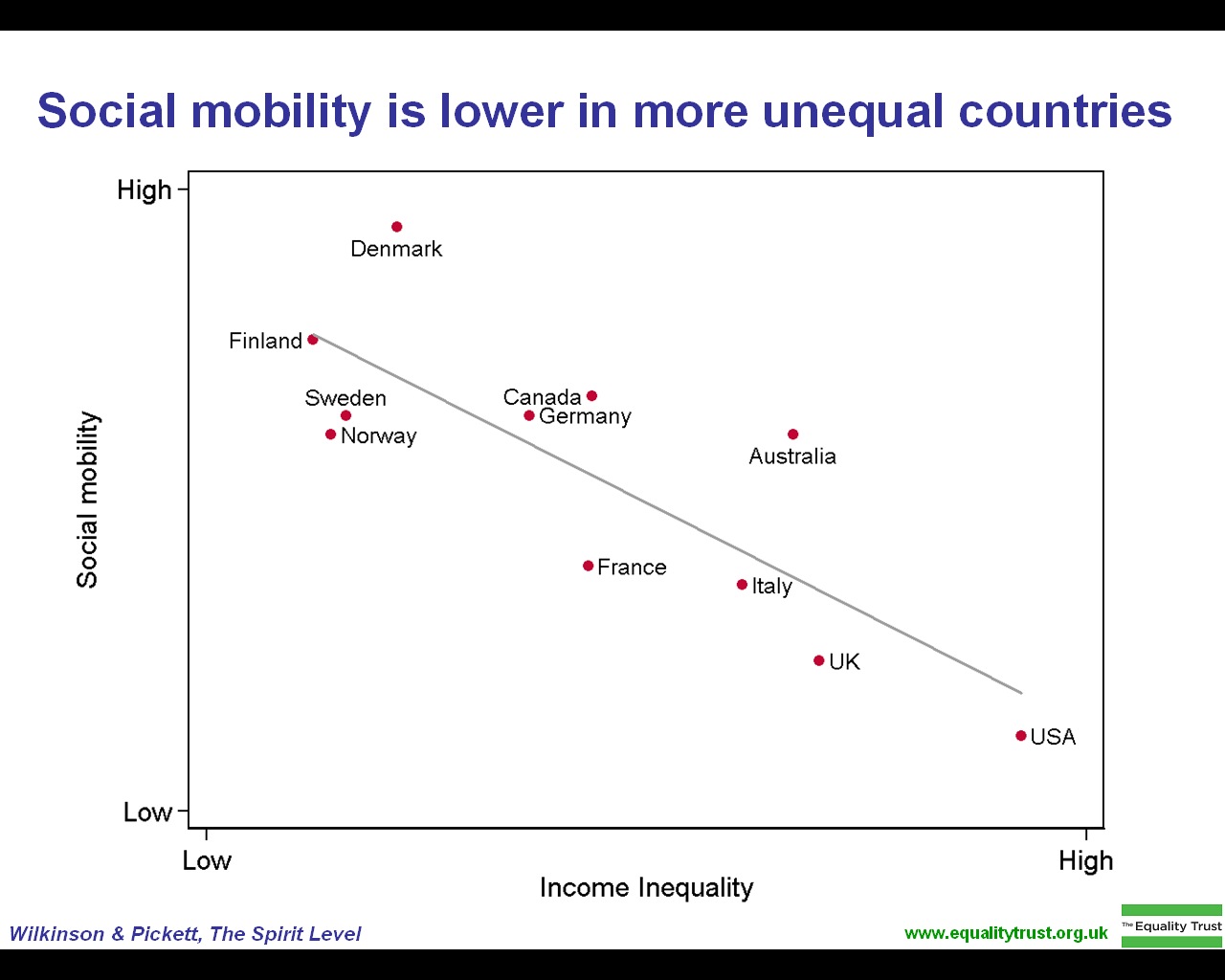

I'm guessing most US students would be shocked by the reality of German public universities which basically consist of giant rooms with blackboards and there's not much general ed to speak of. At the graduate level it gets more interesting but that's in years 5-8. My first 4 years studying ME in Stuttgart were almost 100% lectures with a final exam at the end of the semester. Virtually no tutoring and very little corrected homework.
You don't get what you don't pay for. On the other hand, you don't really get what you pay for in the US either since the universities have become so good at sucking up more and more student loan money without really improving on their core mission of providing higher education.